
Basement Layout Planning: How to Design a Space That Truly Works for Your Home
Why Basement Layout Planning Is the Most Important Part of Any Renovation
When homeowners think about renovating their basement, they often focus on finishes, flooring, lighting, or furniture. While those elements matter, none of them will compensate for a poorly planned layout. Basement layout planning is the foundation of a successful renovation because it determines how the space will function every day for years to come. Across Ontario, from Toronto and Mississauga to Vaughan, Brampton, Kitchener, and London, homeowners are realizing that a thoughtful basement layout is what separates an average renovation from one that genuinely improves daily living and long term value.
Basements are unique spaces. They sit below grade, have structural limitations, mechanical systems to work around, and often lack natural light. Because of this, layout planning must be approached differently than main floor or second floor design. A well planned basement layout accounts for these constraints while maximizing comfort, flow, and flexibility.
Understanding How Your Basement Will Actually Be Used
The biggest layout mistake homeowners make is designing for how they imagine using the basement rather than how they will realistically use it. A successful basement layout begins with honest consideration of lifestyle, family needs, and long term plans.
Some homeowners want a quiet retreat where they can work or relax. Others need space for kids, guests, fitness, or entertaining. In many cases, the basement must serve multiple purposes at once. Layout planning brings clarity to these needs and ensures the space works cohesively rather than feeling disjointed.
In Ontario homes, basements are often expected to do more than any other level of the house. They become offices, gyms, family rooms, guest suites, and storage areas all in one. Without careful planning, this multi use expectation leads to overcrowding or awkward transitions between areas.
Designing Flow in a Below Grade Space
Flow refers to how people move through a space and how naturally one area connects to the next. In basement layout planning, flow is critical because basements can easily feel segmented or boxed in if too many walls are added without purpose.
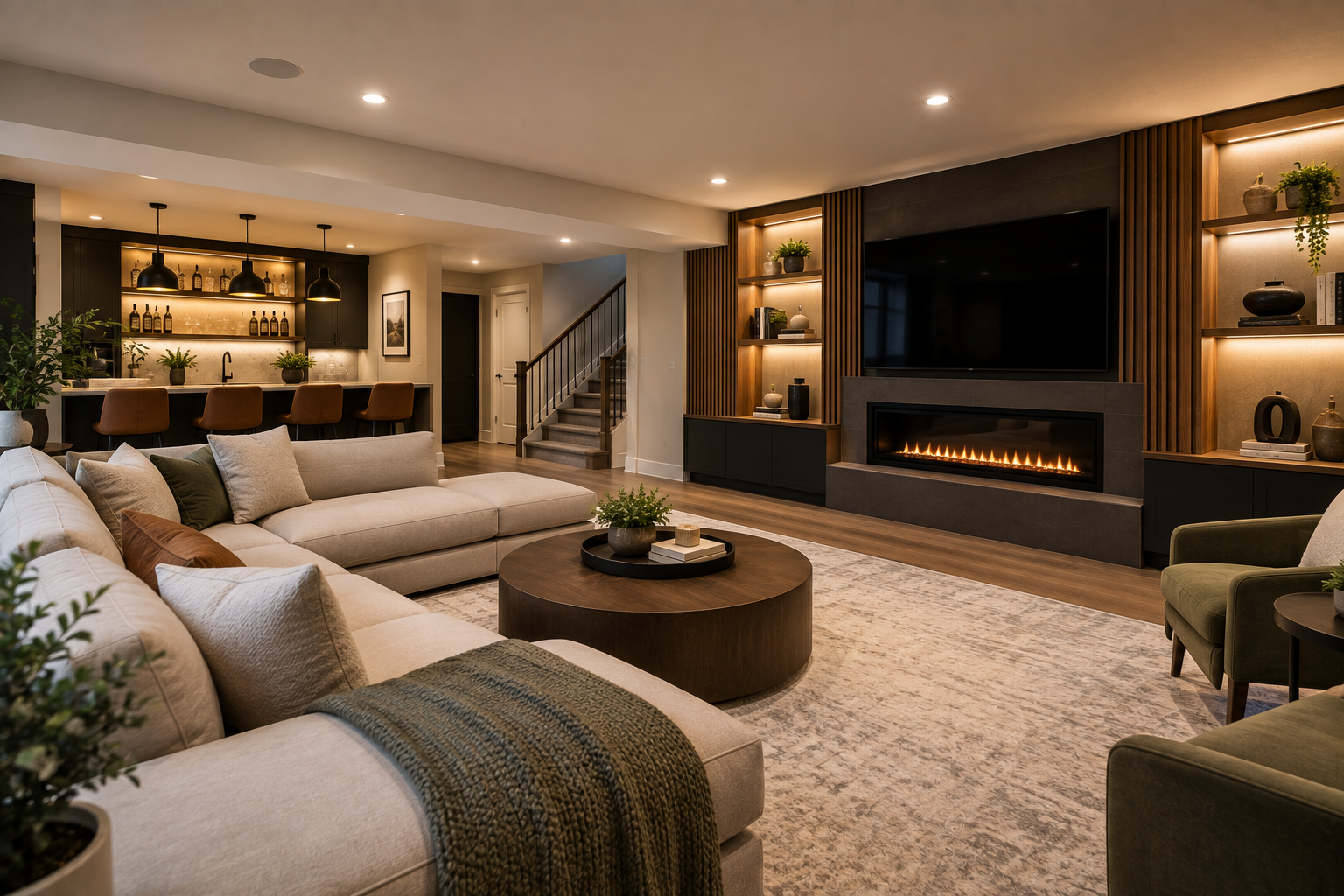
Open layouts often work best in basements, especially when ceiling height or natural light is limited. Instead of dividing the space into many small rooms, designers use visual separation to define areas. This may involve furniture placement, changes in lighting, or subtle ceiling treatments rather than full walls.
When walls are necessary, such as for bedrooms or bathrooms, their placement should support circulation rather than interrupt it. Poorly placed walls can block light, restrict movement, and make the basement feel smaller than it is.
Working Around Structural and Mechanical Constraints
One of the most important differences between basement layout planning and main floor design is the need to work around structural elements. Support posts, load bearing walls, ductwork, plumbing, and electrical panels all influence layout decisions.
Rather than fighting these elements, experienced basement contractors incorporate them into the design. A support post can become part of a feature wall. A bulkhead can be aligned with lighting to feel intentional rather than intrusive. Mechanical rooms can be placed where noise and access are least disruptive.
Ignoring these constraints during layout planning leads to costly revisions later. Addressing them early allows the design to feel seamless and purposeful from the start.
Creating Multi Functional Zones Without Overcrowding
Modern basement layouts prioritize flexibility. Instead of dedicating the entire basement to a single purpose, many homeowners benefit from spaces that adapt over time.
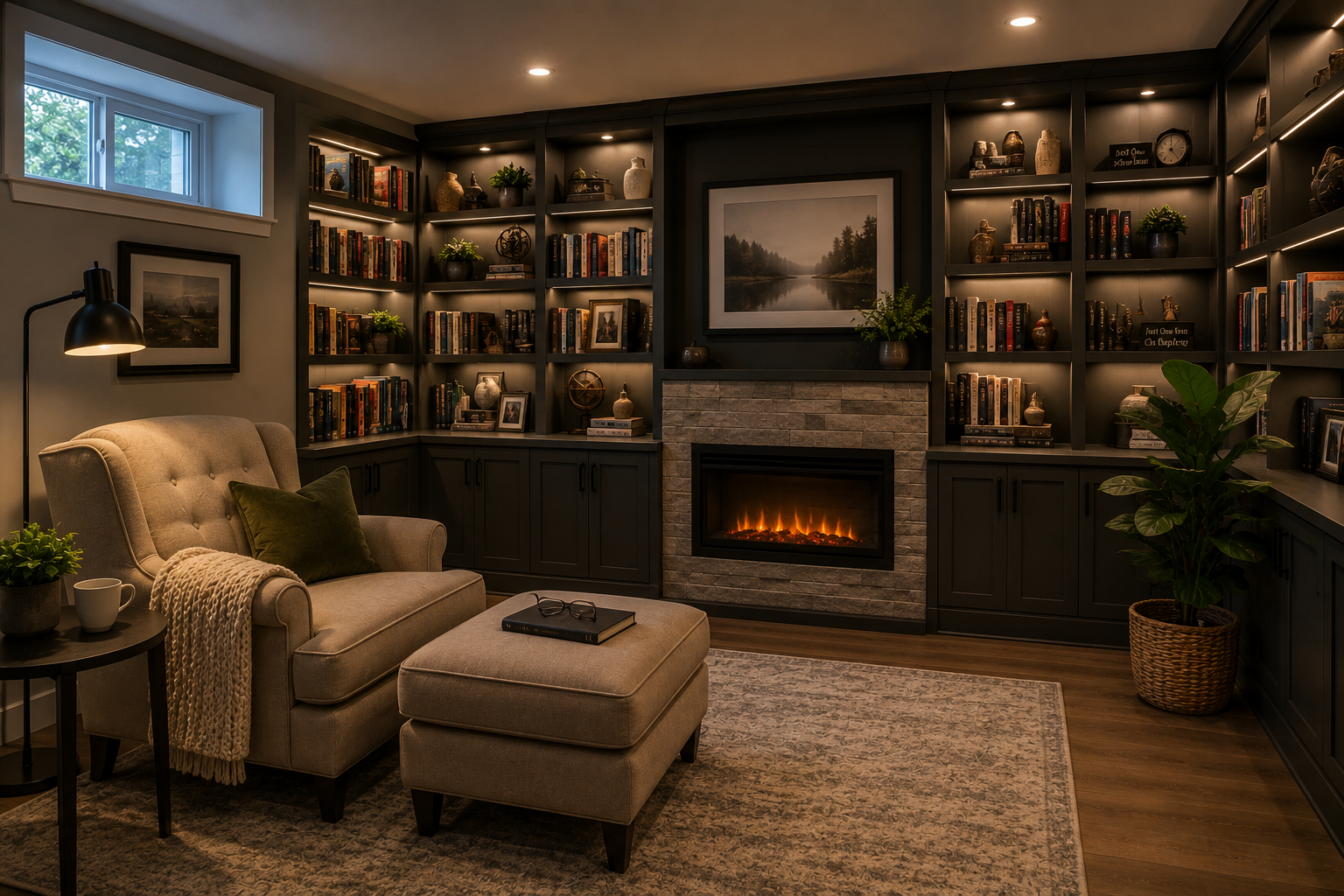
A family room can double as an entertainment space. A home office can also function as a guest room. A fitness area can share space with a relaxation zone. The key is designing zones that feel distinct without being closed off.
This is where layout planning becomes an art rather than a checklist. Proportions matter. Circulation paths must remain clear. Furniture and storage should support, not restrict, movement. When done correctly, the basement feels spacious even if the footprint is modest.
Planning for Light in Basement Layout Design
Light is one of the most influential factors in how a basement feels. Layout planning should always consider how both natural and artificial light will move through the space.
Windows and egress openings should be kept as unobstructed as possible. Placing walls directly in front of windows reduces brightness and creates darker interior zones. Instead, open areas are often positioned near available natural light, while enclosed rooms are placed deeper into the basement.
Artificial lighting must then support the layout. Different areas require different lighting intensities and temperatures. Planning lighting alongside layout ensures that each zone feels comfortable and intentional rather than overly bright or dim.
Privacy Considerations in Basement Layouts
Privacy plays a major role in how basements are used. Layout planning should consider sound separation, visual privacy, and access points.
If the basement includes a bedroom, office, or guest suite, these spaces should be located away from high traffic or entertainment areas. Bathrooms should be easily accessible without requiring guests to pass through private zones. When rental or in law suites are involved, privacy becomes even more critical and must align with building code requirements.
Good layout planning balances openness with separation, ensuring each space serves its purpose without compromising comfort.
Designing Layouts That Support Future Flexibility
One of the biggest advantages of a basement renovation is adaptability. Layout planning should consider not only current needs but future possibilities.
A basement designed solely as a children’s playroom may feel outdated as the family grows. A flexible layout allows that same space to transition into a lounge, office, or guest area later. Similarly, a basement that could one day become a legal apartment should be planned with that potential in mind, even if the conversion happens years later.
Future proof layout planning protects your investment and extends the lifespan of the renovation.
How Layout Impacts Basement Renovation Value
Layout has a direct influence on both lifestyle value and resale value. Buyers respond to basements that feel open, functional, and well organized. Poor layouts are immediately noticeable and difficult to correct without major reconstruction.
A basement with clear purpose, logical flow, and adaptable spaces appeals to a broader range of buyers. In Ontario’s competitive housing market, this translates to stronger interest, faster sales, and better offers.
Layout planning is one of the most cost effective ways to increase renovation ROI because it maximizes usability without necessarily increasing square footage.
Why Professional Basement Contractors Make a Difference
Basement layout planning requires experience, technical knowledge, and creativity. Professional basement contractors understand how design choices interact with structure, moisture control, ventilation, and building codes.
They know which walls can be moved, which cannot, and how layout decisions affect inspections and long term durability. They also understand how to design spaces that feel comfortable despite below grade conditions.
Homeowners who attempt layout planning without professional guidance often end up compromising on comfort or functionality. Expert input ensures the basement works as intended from day one.
Avoiding Common Layout Planning Regrets
Many layout regrets stem from decisions made too quickly or without proper guidance. Rooms that feel too small, hallways that waste space, or furniture that never quite fits are often the result of rushed planning.
Taking the time to visualize how the basement will be lived in daily helps avoid these frustrations. Walking through the space mentally, considering furniture placement, and thinking about movement patterns all contribute to better decisions.
Bringing It All Together
Basement layout planning is not about squeezing in as many rooms as possible. It is about creating a space that feels natural, comfortable, and adaptable. When layout is planned thoughtfully, the basement becomes one of the most enjoyable areas of the home rather than an afterthought.
A well designed basement layout improves daily living, supports changing needs, and adds meaningful value to your property. It transforms the basement into a space that truly works for your home and your lifestyle.
Conclusion: Smart Layout Planning Creates Better Basements
The success of any basement renovation depends on layout planning. Before finishes, lighting, or furniture are chosen, the layout must be designed with purpose, flow, and flexibility in mind. In 2026, Ontario homeowners who invest in thoughtful basement layout planning see better comfort, stronger ROI, and longer lasting satisfaction with their renovations.
If you are planning a basement renovation and want expert guidance on designing a layout that truly works, call Assured Basements today at
1-866-580-8484. Our team specializes in basement renovations that balance function, comfort, and long term value.
You might also like
Get Your Basement Renovated In Toronto By Assured Basements