
How to Create a Basement Lounge That Feels Like a True Extension of Your Home
Why Some Basements Feel Finished but Still Do Not Feel Connected
A basement can be fully renovated and still feel separate from the rest of the house. That happens more often than homeowners expect. The flooring may be new, the walls may be painted, and the furniture may be in place, but something still feels slightly disconnected. Instead of feeling like another natural living area, the lower level can end up feeling like a secondary zone that gets used only occasionally. That is exactly why basement lounge design matters so much. A lounge is not just a place to put a sofa. It is a space that should feel calm, welcoming, comfortable, and fully tied into the way the home already lives.
For homeowners across Toronto, Mississauga, Brampton, Vaughan, Kitchener, London, and surrounding Ontario communities, the goal is increasingly not just to finish the basement but to make it feel like a true extension of the home. That means the lower level has to carry the same emotional warmth and design confidence as the main floor. It needs to feel like a place where people naturally gather, unwind, host, and spend time, not just a room downstairs that happens to be available.
A Basement Lounge Should Feel Lived In, Not Just Styled
One of the biggest differences between a successful basement lounge and an average finished basement is whether the room feels genuinely livable. A basement lounge should support real routines. It should feel like the kind of space where someone can have a quiet coffee, sit with family, watch a show, host a few friends, or simply decompress at the end of the day. If the room looks polished but feels stiff or underused, it is missing the point.
This is where many homeowners start to rethink what they want from a basement renovation. Instead of designing purely around a television or a single feature, they begin focusing on how the room should actually feel. Comfortable seating, a warm layout, layered lighting, quiet storage, and a strong sense of cohesion usually matter much more in the long run than trying to make the room overly dramatic or trend heavy.
Why the Best Basement Lounges Feel Consistent With the Main Floor
If a basement is supposed to feel like a true extension of the home, then it should not look or feel like it belongs to a completely different house. That does not mean the design has to be identical to the main floor, but it should feel related. The materials, tones, style direction, and overall atmosphere should connect naturally so that going downstairs still feels like being inside the same home.
This can happen in subtle ways. Similar flooring tones, compatible paint colors, consistent trim details, related hardware finishes, and complementary lighting styles all help build that connection. Even when the basement has its own personality, it should still feel like part of the same design story.
This is one reason homeowners often start by looking at completed projects before planning their own lower level. Seeing real examples helps clarify how a basement can feel cohesive without simply copying the rooms upstairs.
Comfort Should Lead the Design
A basement lounge will never feel successful if comfort is treated as secondary. This is one of the main reasons lounges differ from more utilitarian basement layouts. The room has to invite people in. It should feel soft enough to relax in, open enough to breathe in, and warm enough that people naturally want to stay there.
That usually starts with seating. A basement lounge needs furniture that supports conversation, lounging, and flexibility. A well sized sectional often works well because it gives the room a more grounded and welcoming feel. In other homes, a sofa with a pair of chairs may create a better balance. The right answer depends on the room size and how the space will be used, but the goal is always the same. The room should feel easy to settle into.
Comfort also comes from what surrounds the seating. Rugs, layered textiles, soft lighting, and a layout that leaves enough breathing room all matter. A basement lounge should feel relaxed rather than tightly arranged.
Layout Is What Makes the Room Feel Natural
A lounge should never feel like furniture was simply pushed into the basement after construction finished. The layout has to support how people move through the room, where they sit, what they look toward, and how the basement connects to nearby features such as bars, built ins, fireplaces, or stairs.
This is where the difference between a basement lounge and a generic family room often becomes clear. A lounge usually feels more intentional. There is a focal point, whether that is a fireplace, media wall, art feature, or simply a central seating arrangement. The furniture placement encourages use and conversation rather than just filling empty floor area.
In open concept basements, the lounge may also need to connect smoothly to another zone. That might be a wet bar, a guest area, a games space, or a home office nearby. A good layout lets the lounge feel defined without making the basement feel cut up or overplanned.
Lighting Has a Huge Effect on Whether the Room Feels Inviting
Basements are especially dependent on good lighting because they often do not have the same amount of natural light as the upper floors. If the lighting is too harsh, the lounge can feel cold. If it is too dim, it can feel closed in. The right balance is what makes the room feel warm, open, and usable at different times of day.
A basement lounge usually works best with layered lighting. Recessed lights can provide the base level of brightness, but they should not be doing all the work. Lamps, sconces, shelf lighting, and subtle accent lighting all help soften the room and create atmosphere. This is particularly important in the evening, when the lounge is most likely to be used.
Lighting also plays a major role in helping the basement feel connected to the rest of the home. If the lower level has a similar warmth and quality of light to the main floor, it feels much less like a separate zone.
Storage Helps the Room Feel More Relaxed
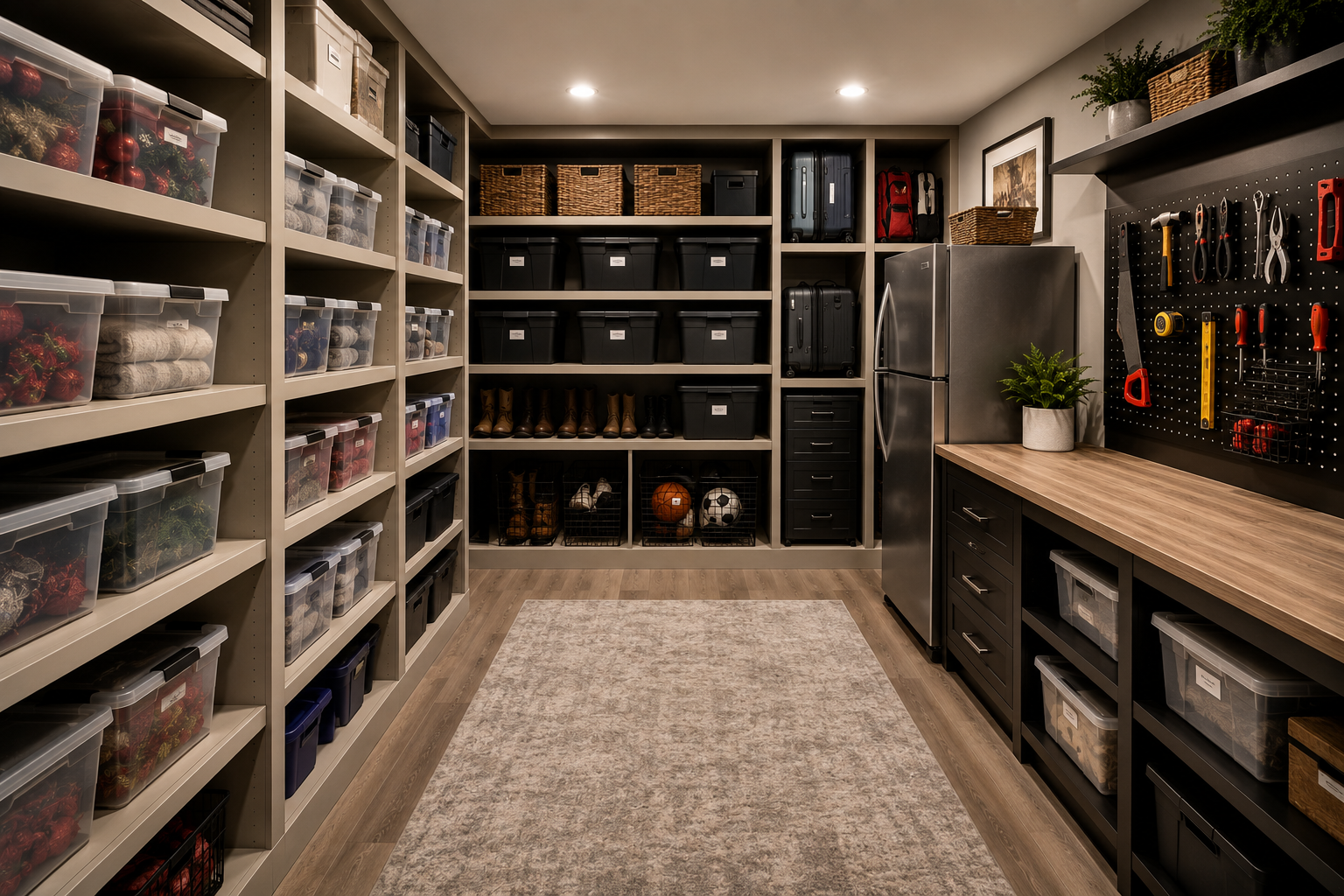
A lounge should feel calm, which means it needs enough storage to keep clutter out of sight. This is one of the most underrated parts of basement design. A room can have beautiful finishes and furniture, but if blankets, remotes, charging cords, kids’ items, books, and miscellaneous overflow have nowhere to go, the room will start feeling chaotic quickly.
Built ins, lower cabinetry, sideboards, hidden storage tables, and integrated shelving all help create a more polished feel. The goal is not to remove all personality from the room. It is to give everything a place so the lounge stays easy to enjoy.
This becomes even more important if the basement is used by the whole family. A well designed lounge should feel usable in everyday life, not just on the day it is photographed.
A Fireplace or Media Wall Can Help Anchor the Space
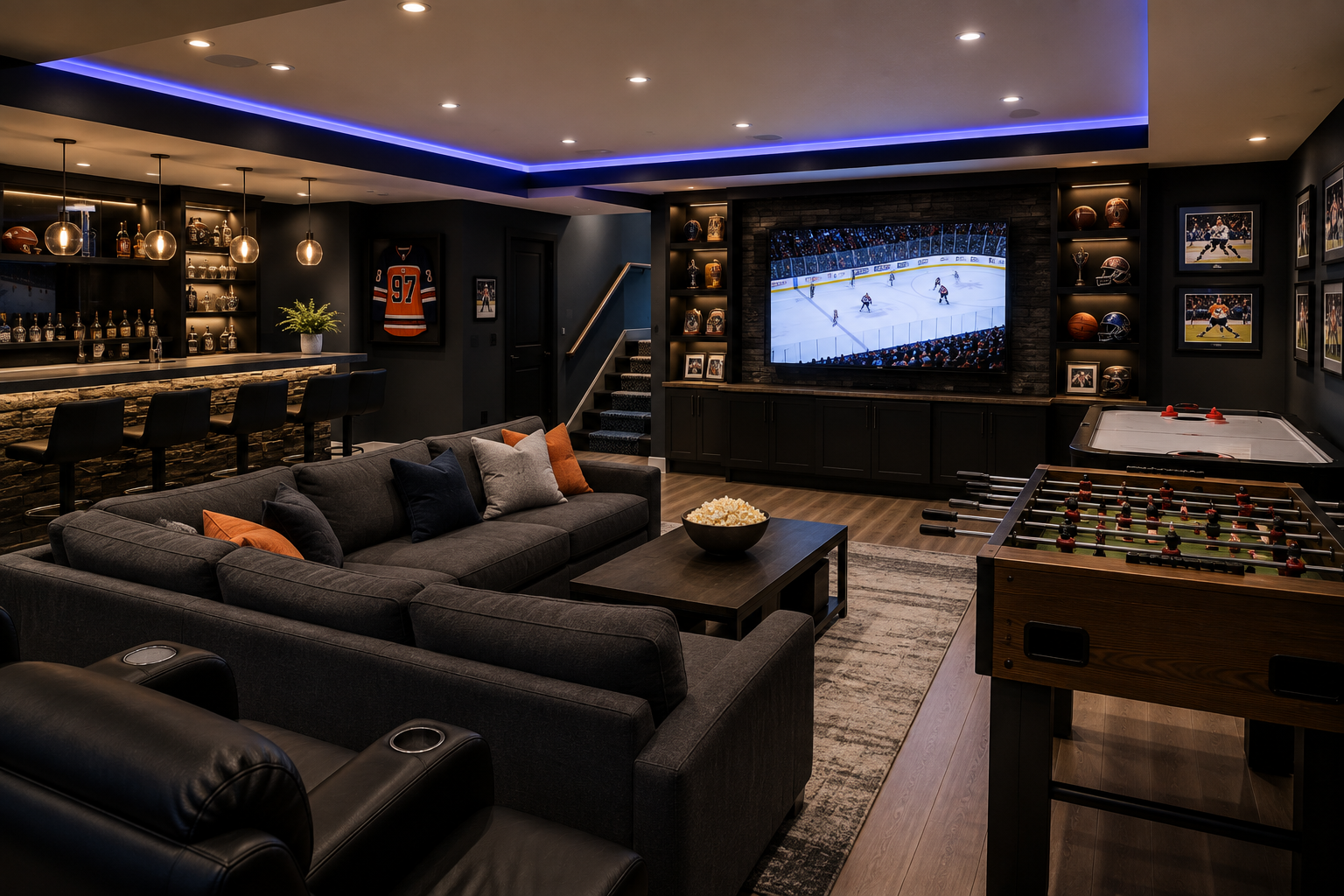
Many of the most successful basement lounge ideas include a visual focal point that grounds the room. In some homes, that is a fireplace wall. In others, it is a media wall with built in storage or shelving. Even a strong art wall or a carefully designed lounge and bar connection can create that sense of structure.
The reason this matters is simple. Basements often have broad open floor plans, and without some kind of visual anchor, they can feel a little undefined. A focal point gives the room identity. It helps the seating arrangement make sense and gives the eye somewhere natural to land.
That does not mean every lounge needs to revolve around a television. In fact, many homeowners want the basement to feel less screen driven and more conversation friendly. The focal point just needs to support the kind of mood the room is meant to create.
Materials and Finishes Shape the Emotional Tone
A basement lounge that feels like part of the home usually uses finishes that feel warm, refined, and comfortable rather than overly hard or overly stark. That could mean warm wood tones, layered textiles, subtle stone accents, soft neutral upholstery, or matte finishes that absorb light more gently.
In 2026, many homeowners are moving toward calmer palettes in basement design. Warm greys, taupes, creams, soft charcoals, natural wood, and muted black accents all continue to work well because they make the lower level feel sophisticated without becoming formal. These kinds of finishes also tend to age well, which matters when the goal is creating a lounge that will still feel relevant years from now.
What matters most is not the exact color or material, but the consistency of the tone. The room should feel composed.
The Lounge Can Still Include Lifestyle Features
A basement lounge can absolutely include extras such as a bar, built ins, a fireplace, or a subtle media wall, but those features should support the room rather than take over it. The best basement lounges are rarely the ones trying to do too much at once. They are the ones where every added element contributes to comfort and use.
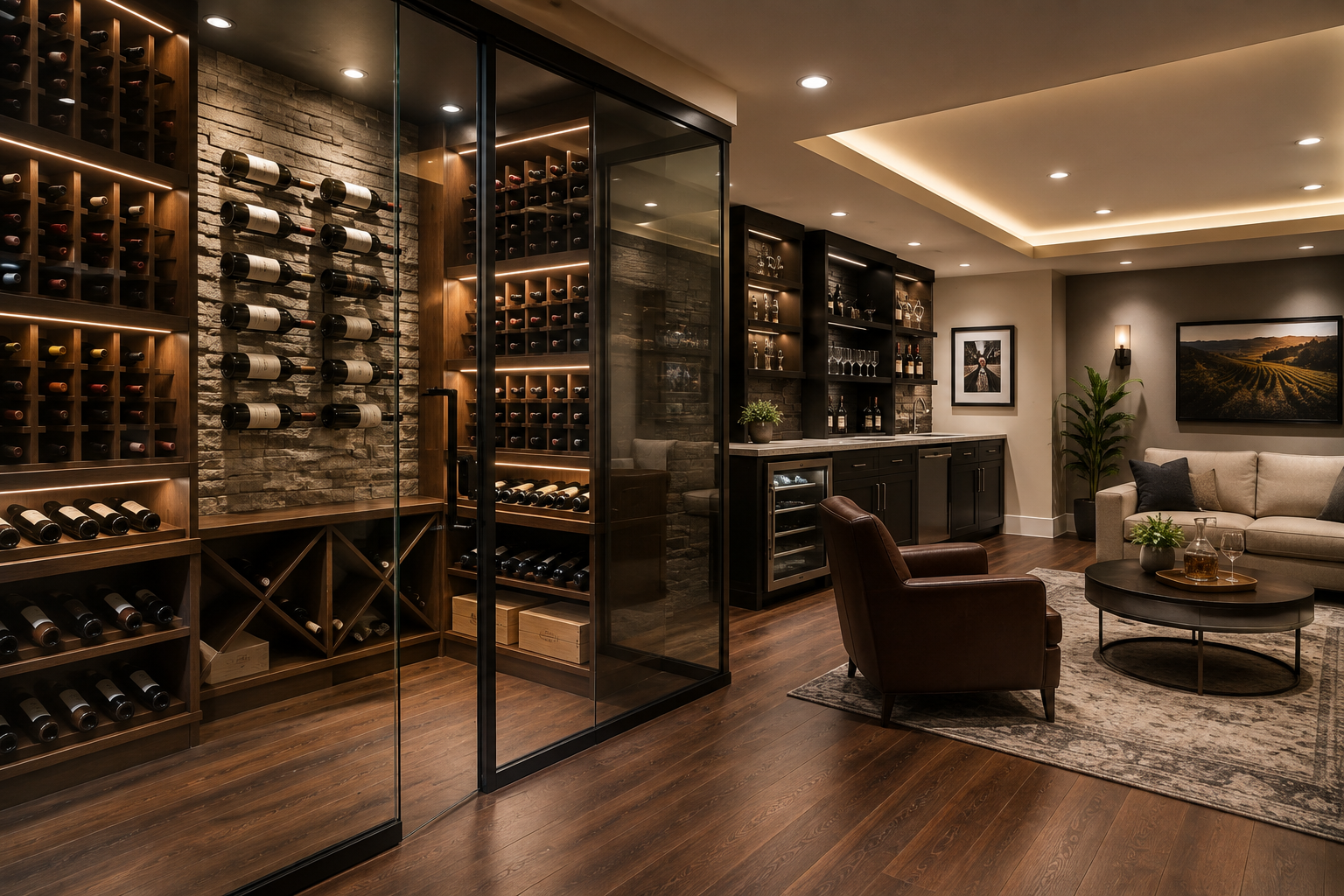
A small bar area can make the lounge feel more self contained and social. Built ins can make it feel cleaner and more polished. A fireplace can add warmth and a focal point. The key is integration. These features should feel like part of the room, not separate attractions competing for attention.
That is often where custom renovation planning makes the biggest difference. When the lounge is designed as part of the whole lower level, it feels much more complete.
Why a Basement Lounge Adds Real Value
A basement lounge adds value because it creates emotional usability. Buyers and homeowners both respond strongly to spaces that feel easy to enjoy. A lounge suggests that the basement is not just finished, but thoughtfully finished. It shows that the lower level can support relaxation, hosting, family time, and everyday life in a meaningful way.
This kind of value is not only about resale. It is also about how the home functions now. A lounge can take pressure off the main floor, give the family another place to gather, and make the house feel larger without changing its footprint. That kind of improvement tends to be felt immediately.
Why Professional Basement Planning Makes the Difference
A basement lounge may look effortless when it is done well, but that ease usually comes from good planning. Layout, lighting, storage, focal points, materials, and transitions all need to work together. In a basement, that also means accounting for ceiling lines, bulkheads, window placement, and how the room connects to the rest of the lower level.
Professional basement contractors understand how to make all of that feel intentional. They can help create a room that looks polished, feels comfortable, and actually supports the way the household lives. That is often the difference between a basement that is technically finished and one that truly feels like part of the home.
Conclusion: A Great Basement Lounge Should Feel Like It Always Belonged There
The best basement lounges do not feel like bonus rooms. They feel like they were always meant to be part of the home. In 2026, more Ontario homeowners are designing basement lounges that feel warm, cohesive, comfortable, and fully integrated with the rest of their living space. With the right layout, lighting, finishes, and storage, a lower level lounge can become one of the most inviting rooms in the entire house.
If you are planning a basement renovation and want a lounge that feels polished, relaxed, and truly connected to the rest of your home, Assured Basements can help create a lower level that feels beautiful and fully livable.
You might also like
Get Your Basement Renovated In Toronto By Assured Basements