
Basement Lighting Design: How to Make Your Renovated Basement Feel Warm and Open
Why Lighting Changes Everything in a Basement
A basement can have beautiful flooring, a smart layout, and high end finishes, but if the lighting is wrong, the space will still feel closed in. That is why lighting design plays such a critical role in any basement renovation. In many Ontario homes, the basement begins as the darkest part of the house. Natural light is limited, ceiling heights can feel lower, and older spaces often rely on one or two basic fixtures that do little to create comfort. Once a renovation begins, lighting becomes one of the most powerful tools available for changing how the space feels.
Across Toronto, Mississauga, Brampton, Vaughan, Kitchener, London, and surrounding communities, homeowners are putting more thought into basement lighting design because they want their lower level to feel like a natural extension of the home. They do not want it to feel like a basement in the old sense of the word. They want it to feel warm, bright, open, and intentional. The right lighting design makes that possible.
Why Basement Lighting Needs a Different Approach
Lighting design in a basement cannot simply follow the same formula used upstairs. The conditions are different. Window openings are smaller, daylight is limited, shadows can feel heavier, and ceiling features such as bulkheads or ductwork may influence fixture placement. This means the lighting plan has to work harder and with more purpose.
In a main floor living room, natural light may carry much of the mood during the day. In a basement, artificial light often carries that responsibility from morning to night. Because of that, lighting design is not just a technical decision. It is a comfort decision, a layout decision, and in many cases, a value decision too.
The Goal Is Not Just Brightness
One of the biggest mistakes homeowners make is assuming that more light automatically means better light. A basement flooded with harsh overhead lighting can feel sterile and flat. A well lit basement should feel balanced. It should support the way the space is used, while also making it feel more welcoming and visually open.
Good basement lighting design is about layering. It is about understanding where general light is needed, where softer mood lighting makes sense, and where task lighting adds real functionality. A successful basement rarely depends on a single type of light. It depends on a combination that works together.
Recessed Lighting Continues to Be a Basement Favorite
In 2026, recessed lighting remains one of the most effective choices for finished basements in Ontario. It is popular for a reason. It provides clean, even illumination without hanging down into valuable ceiling height, which is especially important in lower level spaces.
Recessed lights help ceilings feel less cluttered and allow the basement to maintain a more open, streamlined appearance. In family rooms, offices, open concept layouts, and legal basement apartments, they offer a practical foundation for the overall lighting plan. When spaced properly, they reduce dark corners and help the space feel broader and more balanced.
That said, recessed lighting works best when it is planned carefully. Too many pot lights can make the basement feel overly bright and clinical. Too few can leave dead zones and uneven shadows. Placement matters just as much as the fixture type itself.
Warm Light Helps Basements Feel More Comfortable
Color temperature has a huge effect on how a basement feels. Cooler lighting can sometimes make the space feel sharp or clinical, while warmer lighting creates a more inviting atmosphere. In most finished basements, warm white or soft neutral tones help achieve the right balance.
This becomes especially important in family rooms, guest spaces, lounges, and entertainment areas where comfort matters more than brightness alone. If the basement includes a home office or task oriented area, slightly brighter neutral light can work well in those specific zones, but the overall lighting palette should still feel cohesive.
A basement should not feel like an office building or utility room. It should feel like living space. Warm, thoughtful lighting is a big part of that transformation.
Layered Lighting Creates Better Basements
The most successful basement renovations rarely rely on one source of light. Instead, they combine multiple layers that support both function and mood. This creates depth, flexibility, and a more finished appearance.
Ambient lighting provides the base level of illumination. This is often handled by recessed lights or ceiling fixtures. Task lighting supports specific uses, such as reading, working, or using a bar area. Accent lighting adds softness, highlights design features, and brings personality into the room.
When these layers work together, the basement feels less flat and far more comfortable. This approach also allows homeowners to adjust the atmosphere depending on time of day or how the space is being used.
Wall Sconces and Accent Lighting Add Warmth
Basements benefit tremendously from side lighting. Wall sconces, cove lighting, under shelf lighting, and feature lighting help create visual softness that ceiling lights alone cannot provide.
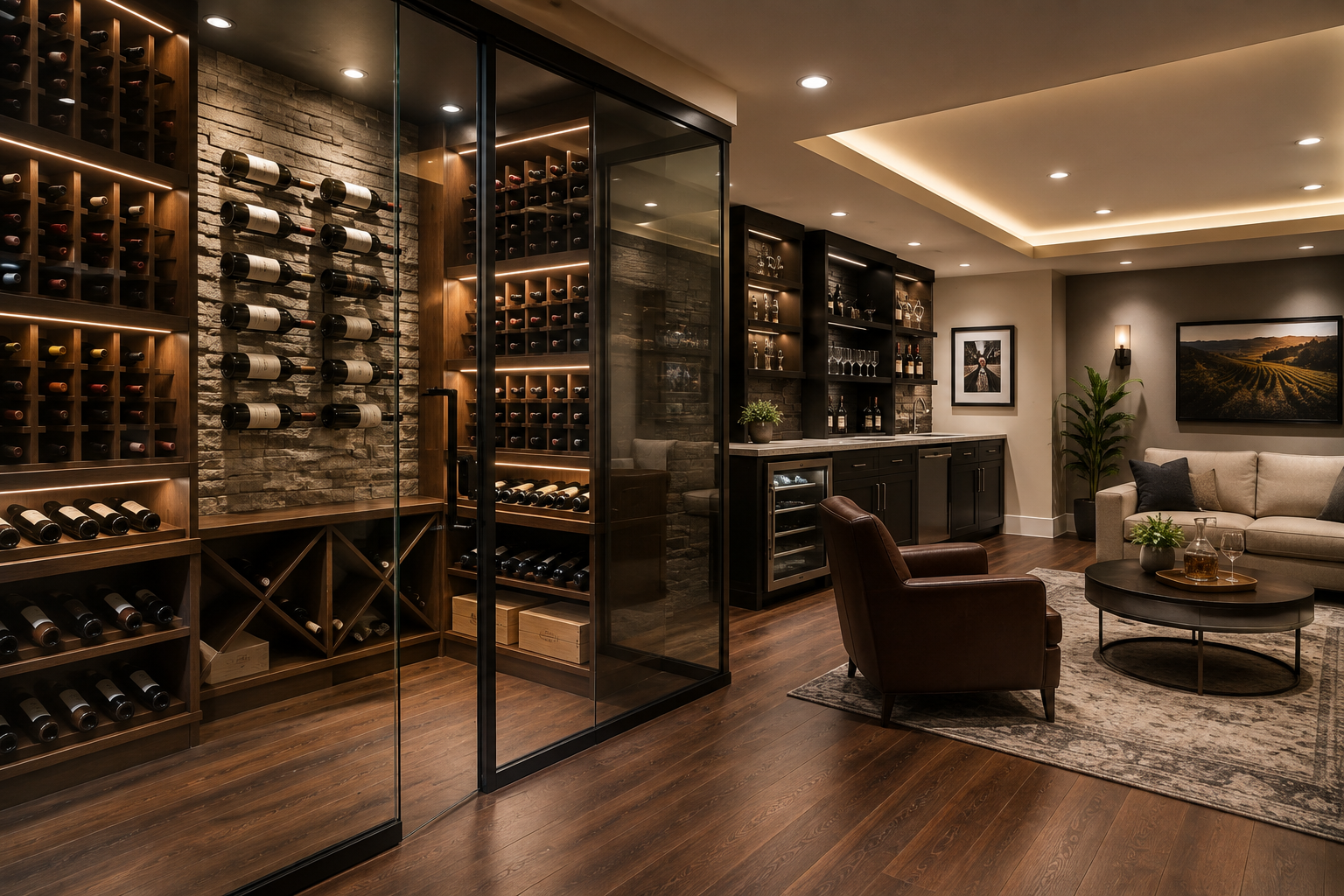
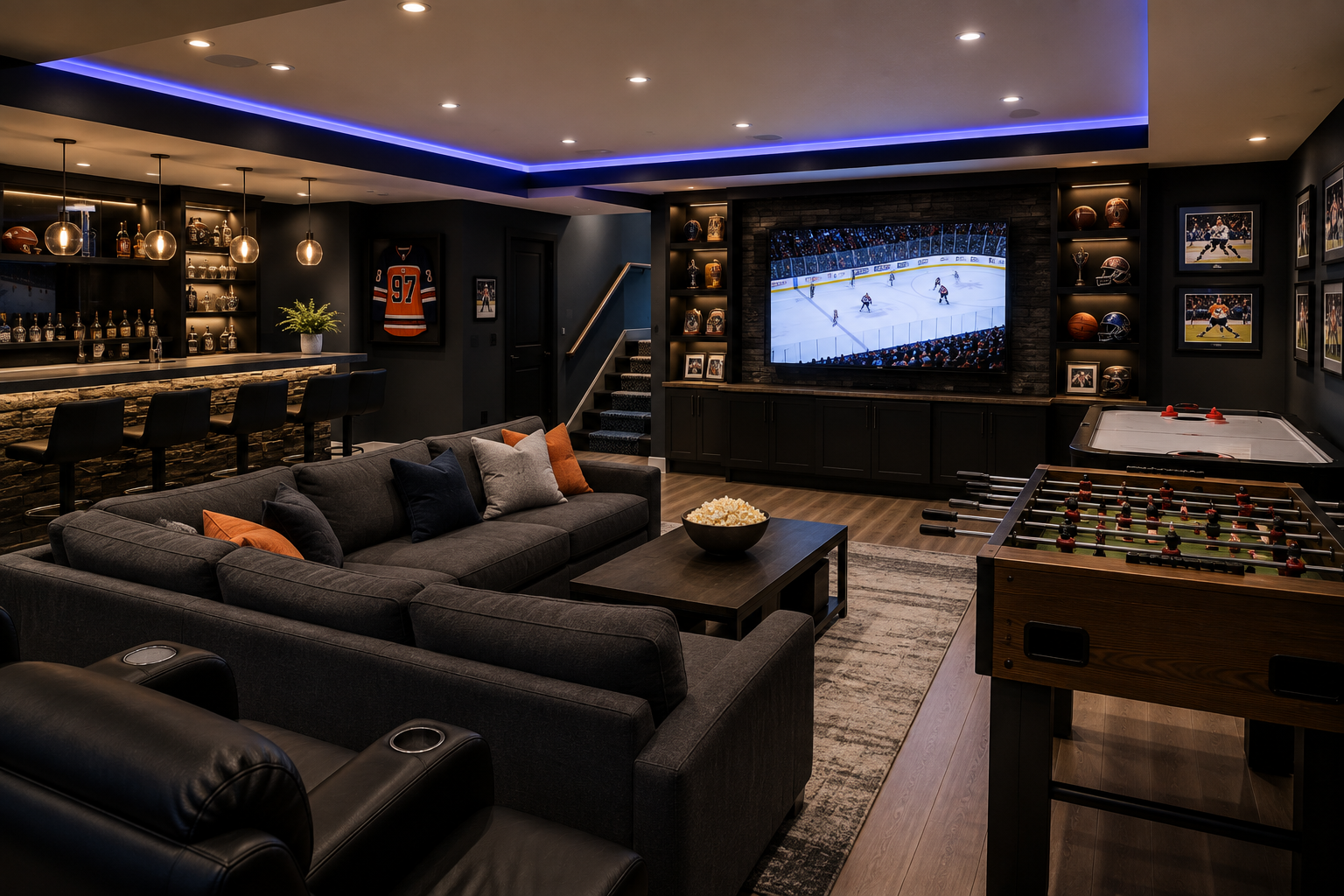
This is particularly useful in spaces where homeowners want a more relaxed mood, such as home theatres, lounges, reading corners, or basement bars. Accent lighting can also help draw attention to a feature wall, built in shelving, or artwork, making the basement feel more curated and intentional.
A basement with only overhead light often feels unfinished, even if the materials are beautiful. Accent lighting fills that gap and makes the room feel complete.
How Lighting Supports Basement Layout
Lighting design should never be treated as separate from layout planning. The way a basement is divided, used, and furnished should directly influence the lighting plan.
A seating area may need softer ambient light and a lamp or sconce for mood. A home office corner needs brighter, more focused lighting. A hallway or stair transition should feel safe and clear without being overly bright. A kitchenette or wet bar needs lighting that supports function while still matching the rest of the basement’s atmosphere.
When lighting is planned alongside layout, the basement feels much more natural. Each area has the light it needs without the entire space feeling overlit or random.
Making a Basement Feel Bigger With Better Lighting
One of the most common design goals in a basement renovation is making the space feel larger. Lighting plays a major role in that. Bright, even illumination helps reduce shadow pockets and makes the room feel more expansive. But this has to be done carefully. The goal is not to blast every corner with light. The goal is to brighten the basement intelligently.
Lighting vertical surfaces can help the room feel taller. Illuminating walls, shelves, and corners makes the eye read the full dimensions of the space instead of focusing only on the center. Keeping the ceiling visually clean and avoiding bulky hanging fixtures also helps preserve openness.
Homeowners are often surprised at how much larger a basement feels once the lighting design is handled properly. In many cases, lighting improves the perception of the room as much as any structural or cosmetic finish.
Natural Light Still Matters, Even in a Basement
While artificial lighting does most of the heavy lifting below grade, natural light should still be part of the conversation. Basement windows, even small ones, influence the success of the lighting design.
When possible, furniture placement and wall layouts should avoid blocking window light. Light finishes near windows help reflect daylight farther into the room. In some cases, enlarging basement windows or improving window wells can make a meaningful difference in both brightness and resale appeal.
The best lighting design does not compete with natural light. It supports it and extends its effect deeper into the basement.
Smart Lighting Has Become More Popular in 2026
As more homeowners invest in modern basement renovations, smart lighting has become a more common part of the design plan. Dimming controls, zoning, app based settings, and programmable scenes make basements more flexible and enjoyable to use.
This is especially valuable in multipurpose spaces. A basement may function as a work area during the day, a family room in the evening, and an entertainment area on weekends. Smart lighting allows the same space to adapt without major effort.
For homeowners building higher end basements or legal apartments, this feature also adds a more modern, premium feel to the finished result.
Stair Lighting and Transition Spaces Should Not Be Ignored
One of the easiest places to overlook basement lighting is the transition between floors. The stairway into the basement sets the tone for the entire space. If it feels dark, narrow, or abrupt, the basement will feel less inviting before someone even reaches the bottom.
Lighting these transition areas properly improves both safety and experience. Stair lights, wall sconces, or carefully placed overhead fixtures can make the descent into the basement feel more integrated with the rest of the home.
Hallways, mechanical room access points, and bathroom entrances should also be lit clearly and comfortably so the basement flows naturally.
Why Lighting Design Impacts Resale Value
Lighting may not be the first feature buyers mention when walking through a finished basement, but they feel its effect immediately. A well lit basement appears cleaner, larger, and more livable. It photographs better, shows better, and leaves a stronger impression.
In Ontario’s competitive real estate market, those details matter. Buyers are drawn to finished basements that feel welcoming and complete. Poor lighting can make even a new renovation feel disappointing. Strong lighting design, on the other hand, helps the basement feel like real living space rather than secondary square footage.
Why Professional Planning Makes the Difference
Lighting design is one of those areas where professional planning pays off quickly. It involves more than selecting fixtures. It requires understanding ceiling conditions, electrical layout, room function, wall placement, window locations, and overall design goals.
Experienced basement contractors know how to balance these factors so that the lighting feels integrated rather than added on. They can help homeowners avoid common mistakes, such as poor pot light spacing, insufficient task lighting, or overly cold color temperatures that make the basement feel less comfortable.
Conclusion: The Right Lighting Makes a Basement Feel Like Home
Basement lighting design has the power to completely transform how a lower level looks and feels. In 2026, Ontario homeowners want more than just bright basements. They want warm, open, inviting spaces that support the way they actually live. A thoughtful lighting plan creates that result by balancing comfort, function, and design.
If you are planning a basement renovation and want lighting that makes the space feel brighter, warmer, and more finished, call Assured Basements today at
1-866-580-8484. Our team designs basements that feel comfortable, modern, and beautifully put together from every angle.
You might also like
Get Your Basement Renovated In Toronto By Assured Basements