
Basement Renovation for Work From Home Living: Creating a Productive Lower Level Office
Why More Ontario Homeowners Are Building Basement Home Offices
Working from home is no longer a temporary adjustment for many households. It has become part of everyday life, and that shift has changed what homeowners want from their living spaces. Across Ontario, from Toronto and Mississauga to Brampton, Vaughan, Kitchener, London, and nearby areas, more people are looking at their basements not as overflow space but as an opportunity to create a proper work environment. A well designed basement home office offers something many upper-floor spaces cannot: privacy, quiet, and the ability to separate work from the rest of daily life.
For homeowners trying to stay productive while sharing a house with family, noise and distraction are often the biggest challenges. Kitchen tables and spare bedroom desks can work for a while, but they rarely provide the consistency or focus that real work demands. A basement renovation for work from home living solves that problem by creating a dedicated office space designed around comfort, efficiency, and long term usability.
A Basement Office Does More Than Add a Desk
The most successful basement home office is not just a desk placed in a finished room. It is a space intentionally designed to support the way someone works every day. That means thinking about layout, lighting, sound control, storage, technology, comfort, and even how the room affects concentration over time.
A lower level office can be one of the most valuable additions a basement renovation includes because it changes how the home functions overall. When work has a defined place, the rest of the house feels less disrupted. Family members are not working around a temporary setup, and the person using the office can step into a more focused environment each day. That separation has real value, both professionally and personally.
Why the Basement Is Often the Best Place for a Home Office
One of the biggest advantages of placing an office in the basement is privacy. Unlike the main floor, which is often connected to the busiest parts of the home, the basement naturally creates distance from household activity. That distance matters if calls, meetings, deadlines, or focused work are part of the daily routine.
The basement also gives homeowners more flexibility in how the office is designed. A spare bedroom office often has to share space with other uses or fit into an awkward footprint. A basement renovation can create an office that actually matches the work being done, whether that means room for a large desk, built in storage, video conferencing, or a sitting area for reading and planning.
For some homeowners, the basement office is purely about productivity. For others, it becomes part of a broader lower level design that includes a family room, guest area, or wellness zone. Either way, the office benefits from being in a part of the home that can be more intentionally shaped.
The Right Layout Makes All the Difference
Layout is one of the most important parts of any basement office renovation. A work from home space needs to feel calm, efficient, and easy to use, not squeezed into whatever room happens to be available. The office should support movement, concentration, and comfort throughout the day.
Some homeowners do best with a fully enclosed office, especially if privacy and noise control are top priorities. Others prefer an open concept office zone within a larger finished basement. The best approach depends on the kind of work being done. Someone who spends much of the day on calls may benefit from a more enclosed room, while someone doing creative or independent work may prefer a brighter, more open setup.
What matters most is that the office feels intentional. There should be enough room for the desk and chair to sit comfortably, enough storage to avoid clutter, and enough visual separation that the workspace feels distinct from the rest of the basement.
Lighting Is Essential in a Basement Office
Lighting plays a huge role in how productive a basement office feels. Basements naturally have less daylight, so the artificial lighting plan needs to be handled carefully. A poorly lit office can quickly feel draining, while a well lit one can help support focus and energy.
The best basement office lighting balances brightness with comfort. Recessed ceiling lighting often works well as a base layer, especially in finished basements where ceiling height matters. From there, task lighting becomes important. A desk lamp or focused work light can improve comfort and reduce eye strain, especially for homeowners who spend long hours on screens.
Natural light should also be used wherever possible. If the basement has windows, the layout should support them rather than block them. Even modest daylight can make a work from home office feel more open and less isolated. In 2026, more homeowners are intentionally designing basement offices around available light because they know how much it affects mood and productivity.
Sound Control Is One of the Biggest Benefits
A basement office only works well if it feels relatively quiet. That is one of the reasons many homeowners choose the lower level in the first place. But if the office is placed beneath a busy kitchen or family area without any sound planning, the basement may still pick up more noise than expected.
This is where sound control becomes one of the smartest parts of a basement office renovation. Proper construction, insulation, and design choices can make a major difference in reducing the transfer of footsteps, conversations, and everyday household noise. For people who spend time on video meetings or need long periods of concentration, this can be one of the most valuable upgrades in the entire renovation.
A quieter office is not just more professional. It is easier to work in, easier to stay focused in, and easier to treat as a true workspace.
Storage Keeps the Office Functional
A basement office can look beautiful on day one and then slowly lose its appeal if there is nowhere to put anything. Papers, equipment, chargers, books, notebooks, printers, and work materials all need a place. Without proper storage, clutter builds quickly and starts to affect how the office feels.
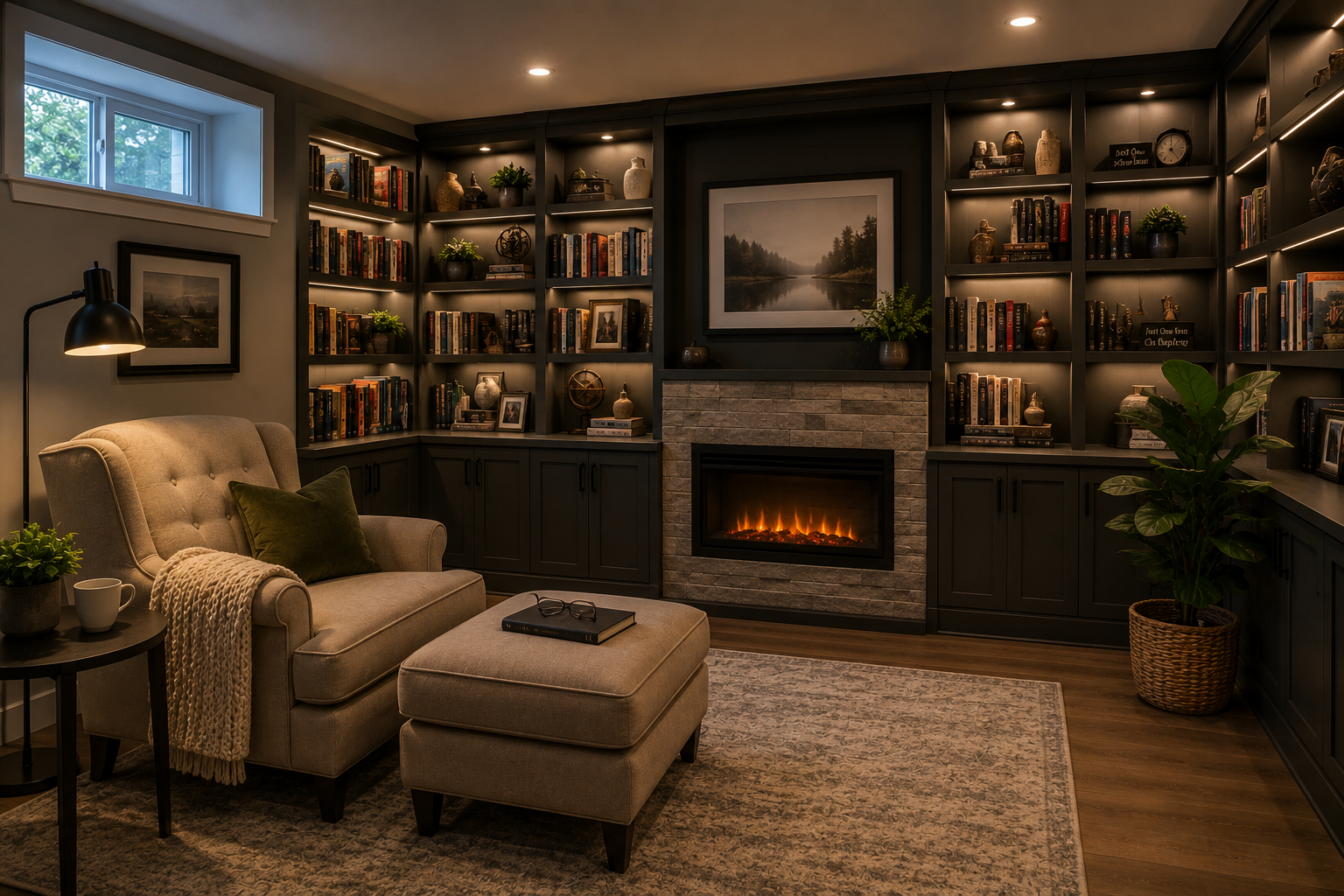
Built in shelving, cabinetry, drawers, and closet storage can all help keep the room organized without making it feel crowded. In many basement office renovations, this is where custom planning really pays off. Storage can be designed around the way the homeowner actually works rather than added later as an afterthought.
An organized office tends to feel calmer and more efficient. That has a direct effect on how often the space gets used and how productive it feels over time.
Comfort Matters More Than Many People Expect
A basement office is not just a place to work. It is often a place where someone spends many hours each week. That means comfort has to be part of the design from the beginning. Flooring, temperature control, seating, and even the visual atmosphere of the room all matter.
Basements can naturally feel cooler than upper floors, so insulation and HVAC planning are important. The office should feel comfortable year round, not slightly chilly or stale. Flooring should also support daily use. A hard surface may work well if it is paired with a chair mat or rug, while some homeowners prefer a warmer underfoot feel in dedicated office zones.
The more comfortable the room feels, the more likely it is to support consistent, focused work. A good basement office should feel like part of the home, but with enough separation that it also supports professional routines.
Designing for Video Calls and Hybrid Work
One of the realities of work from home living is that the office is often visible to other people. Video calls, remote meetings, and online presentations have made the visual background of a home office more important than it used to be. A basement office renovation is a chance to create a space that works well both in person and on screen.
That does not mean the room needs to feel staged. It just means the design should consider what appears behind the desk, how the lighting hits the face, and whether the room feels polished enough for professional use. Built ins, simple art, neutral tones, and clean organization all help create an office that looks as good as it functions.
This is one of the subtle ways basement office design has changed in recent years. The room is no longer just for the person using it. It is often part of how they appear professionally too.
A Basement Office Can Still Be Flexible
Even if the basement office is the priority, it can still be designed with flexibility in mind. Some homeowners want the room to double as a guest room in the future. Others may want the basement to support changing work needs over time. The smartest renovations make room for that adaptability.
This might mean leaving enough space for a daybed or pullout sofa, using furniture that can evolve, or designing storage that can serve multiple purposes later. It could also mean placing the office in a location that would one day work as a bedroom or quiet lounge if work from home needs change.
That flexibility adds long term value because it allows the space to evolve with the household rather than becoming too specific to one phase of life.
A Basement Home Office Adds Real Value to the Home
From a resale standpoint, a finished basement office can be a strong asset. Buyers increasingly value homes that support flexible work arrangements, and a polished lower level office helps a property stand out. Even if a future buyer does not use the space exactly the same way, they will still appreciate the layout, privacy, and function it offers.
In Ontario’s current housing market, a home that supports remote work well can have a meaningful edge. A basement office is no longer a niche feature. For many buyers, it is a practical and desirable part of modern living.
Why Professional Basement Contractors Matter
A basement office renovation may sound straightforward, but it works best when it is planned as part of the basement as a whole. Ceiling height, lighting, ventilation, sound control, electrical placement, internet access, and finish selection all have to come together to make the office truly effective.
Professional basement contractors understand how to create a lower level office that feels comfortable, polished, and highly usable. They also know how to design around structural and mechanical realities without compromising the look or function of the room. That expertise makes a major difference in whether the office feels like a true work environment or simply a desk in a finished basement.
Conclusion: A Basement Home Office Can Make the Whole House Work Better
A basement renovation for work from home living is one of the smartest ways to improve both productivity and everyday comfort. In 2026, Ontario homeowners are increasingly recognizing that a dedicated lower level office can create better focus, stronger work life boundaries, and more flexibility for the entire household. With the right layout, lighting, storage, and sound control, a basement office becomes much more than a convenient workspace. It becomes a lasting improvement to how the home functions overall.
If you are planning a basement renovation and want to create a home office that feels professional, comfortable, and built for real life, call Assured Basements today at 1-866-580-8484. Our team designs lower level spaces that support productivity, comfort, and long term value.
You might also like
Get Your Basement Renovated In Toronto By Assured Basements