How to Design a Basement Guest Suite That Feels Comfortable and Private

May 13, 2026

Why More Homeowners Are Adding Guest Suites to Their Basements

A basement guest suite is one of the most practical ways to make a finished lower level feel complete. It adds privacy for visitors, flexibility for family use, and long term value for the home itself. Across Ontario, homeowners are increasingly renovating basements not just for media rooms or extra storage, but to create spaces that can comfortably host overnight guests, extended family, or returning adult children. Assured Basements positions its basement renovation and remodelling services around transforming lower levels into functional living spaces, and that naturally includes guest-ready designs that support comfort and everyday usability. 


For homeowners in Toronto, Mississauga, Brampton, Vaughan, Kitchener, London, and surrounding areas, a guest suite often solves a real need. It gives visitors a place to stay that feels more private than a pullout sofa upstairs. It also helps the basement serve a more meaningful role in the home. Instead of feeling like overflow space, the lower level starts to function like an extension of the house with its own purpose and rhythm. Assured Basements explicitly serves Toronto and the GTA while also noting broader Ontario service, including cities like Kitchener and London.  


A Guest Suite Should Feel Intentional, Not Temporary

The biggest difference between a true basement guest suite and a spare sleeping area is how the space feels. A guest suite should feel planned. It should not look like furniture was moved around at the last minute just to make room for someone staying over. The layout, lighting, bathroom access, and storage should all support the idea that someone can comfortably spend time there.


This does not mean every guest suite needs to be large or luxurious. It simply means the space should feel settled and usable. Even a modest basement can be designed in a way that gives guests more privacy and comfort than they would have elsewhere in the home. That is one reason homeowners often start with a broader
basement renovation plan and then shape one portion of the lower level around guest use. Assured Basements describes basement renovation as turning a basement into real living space and advises homeowners on finishes and design choices that improve long term usability and value.


Privacy Is What Makes a Guest Suite Truly Valuable

When people stay overnight, privacy matters. That is what makes a basement such a strong location for a guest suite in the first place. It separates overnight visitors from the main sleeping areas of the home and allows everyone to feel more relaxed. Guests are not walking through busy family spaces first thing in the morning, and homeowners do not feel like their everyday routines are constantly being interrupted.


This is especially valuable for homes that host family members regularly. Parents visiting from out of town, adult children coming back for a holiday, or friends staying for a weekend all have a more comfortable experience when the basement is designed with privacy in mind. A suite does not need a separate entrance to feel private. Often, privacy comes from the thoughtful positioning of the bedroom area, access to a nearby bathroom, good sound control, and a layout that gives people some breathing room.


The Best Guest Suite Layouts Feel Balanced

A basement guest suite works best when it balances sleeping space with a little room to live. A bed alone is not always enough. If the basement allows it, even a small seating area can make a major difference in how comfortable the suite feels. A chair, side table, reading lamp, or compact lounge zone gives guests somewhere to settle outside of the bed itself.


This is where layout planning becomes so important. In some homes, the guest suite may be a separate enclosed room with access to a larger basement lounge nearby. In others, the suite may include a sleeping zone and seating area within a more open basement plan. The right choice depends on the size of the lower level and how often the space needs to shift between guest use and everyday household use.


Homeowners often look through a contractor’s completed portfolio to understand how different layouts come together in real spaces. Assured Basements has an
Our Work gallery that showcases completed basement projects and can help homeowners visualize how sleeping, living, and bathroom areas might work together in one finished lower level.  


A Basement Bathroom Makes the Guest Experience Better

If there is one feature that elevates a basement guest suite immediately, it is a bathroom. A nearby basement bathroom makes the lower level feel far more complete and convenient. It allows guests to move through the space naturally and gives the suite a stronger sense of independence.


That bathroom does not need to be oversized to be effective. What matters is that it feels clean, comfortable, and easy to use. A walk in shower, good lighting, smart storage, and durable finishes can all help the space feel more polished. For many homeowners, the bathroom is what shifts the basement from occasional guest space to something that feels more like a true suite.


This is also where broader
basement remodelling planning comes in. Assured Basements describes its remodelling work as transparent and detailed, with itemized planning around project scope and custom features, which is especially important when plumbing, cabinetry, finishes, and layout need to work together in a guest suite design.  


Lighting Has to Make the Space Feel Warm

Because basements naturally have less daylight, lighting carries more emotional weight in a guest suite than many homeowners expect. The lower level should not feel dim or improvised. It should feel warm, restful, and welcoming from the moment someone walks in.


That usually means combining overhead lighting with softer layers. Recessed ceiling lights can handle general illumination, while lamps, sconces, or warmer bedside lighting add the comfort that makes a guest area feel residential rather than purely functional. If the basement has windows, the layout should support the available daylight rather than block it.


A guest suite should feel calm at night and fresh during the day. Good lighting helps create that balance.


Storage Is What Keeps the Space Comfortable

Guests may not need the same level of storage as a full time resident, but they still need somewhere to put things. A basement guest suite feels more complete when there is space for a suitcase, a few hanging items, folded clothes, toiletries, and everyday essentials. Without that, the room can quickly feel temporary.


This is one reason built ins, closets, and well planned cabinetry matter. Even a small amount of dedicated storage can make the suite feel dramatically more useful. It also helps the basement stay visually clean when guests are not there, which matters if the lower level is also being used by the household between visits.


Good storage is one of those quiet design features that makes the whole suite feel more thoughtful.


Comfort Comes From More Than Furniture

A guest suite needs to feel physically comfortable too. In Ontario basements, that means paying attention to insulation, temperature, flooring, and air quality. A beautifully styled room will still feel disappointing if it is chilly, stuffy, or slightly damp.


This is where basement-specific construction experience matters. A properly renovated lower level should feel just as comfortable as the rest of the house. Assured Basements emphasizes the importance of guiding homeowners through materials and finish choices and highlights a structured process from design through inspection, which is especially important in creating a guest-ready lower level that feels comfortable year round. The company’s work process page also describes a clear step-by-step renovation process ending with a final inspection. 


Warm flooring choices such as luxury vinyl plank, properly planned lighting, and good ventilation all contribute to that comfort. The guest may only stay for a few nights, but the space should still feel intentional and welcoming the entire time.


Sound Control Makes the Suite Feel More Private

One of the less visible but most valuable upgrades in a basement guest suite is sound control. If footsteps, conversations, and television noise travel constantly between the main floor and the basement, the suite will never feel as restful as it should.


This matters for both the guests and the homeowners. Guests sleep better and feel more private. The family upstairs can continue normal routines without feeling like they need to tiptoe through the house. Sound planning is especially worth considering if the guest suite sits below a busy kitchen, hallway, or family room.


A quieter basement simply feels more complete. That often becomes one of the features people appreciate most after the renovation is finished.


Guest Suites Add Long Term Flexibility

One of the strongest reasons to design a guest suite is that it creates flexibility beyond its immediate use. A well planned guest suite can later serve as an in law area, a private space for an older child, a quiet retreat for work or reading, or even a stepping stone toward future suite conversion if the layout and services are planned properly.


That adaptability gives the renovation more staying power. Even if the space is not used for guests every month, it remains useful. It becomes one of the most flexible parts of the home because it is designed around comfort, privacy, and function rather than a narrow single purpose.


That kind of flexibility is also part of what makes finished basements appealing to future buyers.


A Thoughtful Guest Suite Can Strengthen Resale Appeal

From a resale standpoint, buyers respond well to finished basements that clearly solve lifestyle needs. A guest suite is one of those features that people understand immediately. It suggests comfort, hosting potential, and a home that can support changing family dynamics.


Even buyers who do not expect overnight guests may still see the benefit. They may imagine using the suite for a home office, quiet den, multigenerational space, or future basement bedroom. The value comes from the flexibility the design creates.


That is why guest suites tend to feel like meaningful upgrades rather than decorative extras.


Why Working With Basement Specialists Matters

A basement guest suite may seem simple at first glance, but it depends on many parts of the renovation working together well. Layout, comfort, moisture control, lighting, storage, sound, and bathroom planning all have to support the final experience. Basement specialists understand how to make that happen in a below-grade space where structure and systems can limit what is possible.


Assured Basements highlights that it handles the complexities many homeowners and contractors find difficult in basement remodelling, offers 3D floor plans, in-house staff, licensed trades, and dedicated project oversight, all of which are directly relevant when designing a basement that needs to feel polished and livable rather than improvised. 


For homeowners, that means a guest suite that feels intentional from the start rather than assembled through compromise.


Conclusion: A Basement Guest Suite Is One of the Smartest Ways to Make the Lower Level More Useful


A basement guest suite adds more than a place for someone to sleep. It adds privacy, flexibility, comfort, and a stronger sense that the lower level is part of the home in a meaningful way. In 2026, Ontario homeowners are increasingly choosing guest suite basement renovations because they want spaces that work better for family visits, changing needs, and long term value. When planned properly, a guest suite can be one of the most useful and appreciated parts of the entire basement.


If you are planning a lower level renovation and want to create a guest suite that feels warm, private, and beautifully integrated into the rest of the basement, take a look at the
Our Work gallery for inspiration or visit the Contact page to schedule a consultation with Assured Basements. You can also call 1-866-580-8484 to get started.

You might also like
Basement Wet Bar Ideas | Stylish Basement Bar Design
May 4, 2026
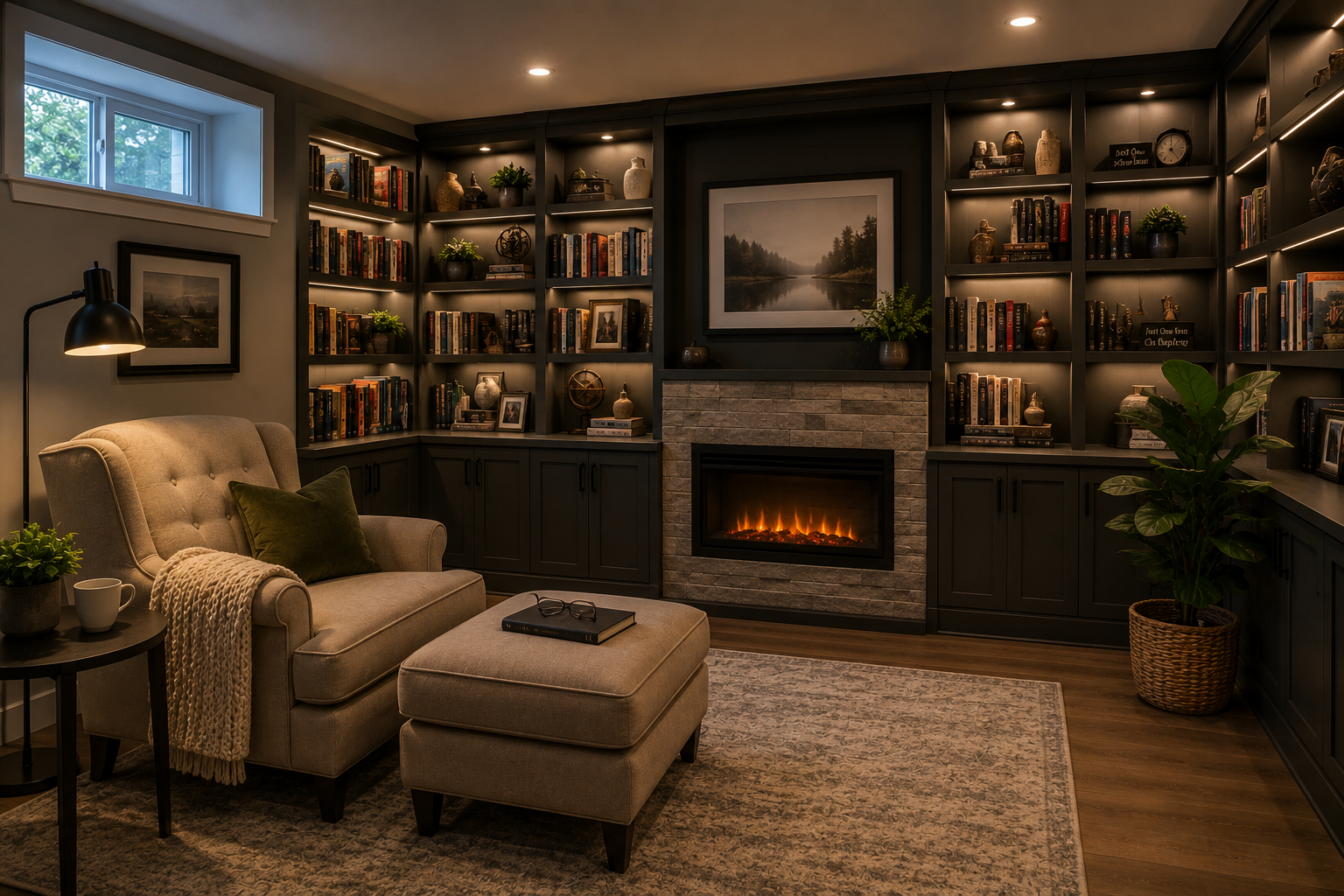
Explore basement wet bar ideas that add style, storage, and function in 2026. Smart design inspiration for Ontario basement renovations.
April 24, 2026
Why Family Focused Basement Design Matters More Than Ever Basement renovations used to be treated as simple bonus projects. Homeowners finished the lower level, added a television, maybe a sofa, and called it done. Today, families expect much more from their basements. Across Ontario, from Toronto and Mississauga to Brampton, Vaughan, Kitchener, London, and surrounding communities, homeowners are using basement renovations to solve real day to day needs. They want lower levels that feel comfortable, practical, flexible, and genuinely useful for both children and adults. That shift is important because a family basement cannot succeed on appearance alone. It has to work. It needs to support play, downtime, homework, movie nights, guests, storage, and the general unpredictability of family life. In 2026, the best basement renovation trends for families are not about flashy features that look good for a week. They are about thoughtful design choices that make the home function better every day. Families Need More Than Just Extra Space One of the biggest reasons families renovate their basements is simple. Life starts to outgrow the main floor. Toys spread into living areas, teenagers want more independence, work from home routines overlap with family time, and everyone starts competing for quiet, comfort, and room to breathe. A well planned basement can relieve that pressure. But extra square footage alone is not enough. If the basement is poorly laid out, dimly lit, or designed without family routines in mind, it quickly becomes another underused room. That is why family focused basement renovations are different from more generic basement finishing projects. They start by asking how the household actually lives. What do the kids need. What do the parents need. Where does stress build up upstairs. What kind of space would make life feel easier. When those questions drive the renovation, the results are much stronger. Open Layouts Continue to Work Well for Family Basements One of the most useful trends in family basement design is the continued move toward open, flexible layouts. Families rarely need a basement that is boxed into too many small rooms. What they usually need is a space that can adapt. An open lower level gives parents more visibility if younger children are using the space. It also allows the room to shift naturally between uses. A play area during the afternoon can become a movie room at night. A reading corner can become a homework zone. A large open floor plan also makes it easier for the basement to evolve as children grow. What starts as a place for toys and games can later become a teen lounge, workout area, or secondary family room. The goal is not to make everything one large undefined space. It is to create flow while still giving each zone enough identity to feel purposeful. Zoned Spaces Are Replacing One Room Designs Families no longer want basements that only do one thing. They want lower levels that support multiple uses without feeling cluttered or chaotic. That is why zoned layouts are becoming one of the smartest family basement trends. A basement can have a media area, a quiet corner for reading or homework, and an open section for kids to play or hang out, all within one larger plan. The zones do not necessarily need full walls. In many cases, furniture placement, lighting, rugs, built ins, or ceiling details can help define one area from another. This approach works especially well for families because it allows more than one thing to happen at once. One child can be watching a movie while another is working at a desk or playing nearby. Parents can still use the room without feeling like the whole basement belongs to only one age group or one purpose. Basement Storage Has Become a Family Essential One of the least glamorous but most important family basement renovation trends is better storage. Families simply have more things to manage. Games, books, blankets, sports equipment, seasonal items, school supplies, electronics, and toys all need a home. Without storage, even the most beautiful basement starts to feel messy and stressful. Built in storage is especially valuable because it keeps the lower level looking calm and organized without relying on temporary baskets or overcrowded furniture. Cabinetry, wall shelving, storage benches, under stair solutions, and custom media units all help create a basement that feels polished while still handling real life. This is one of the clearest examples of a design feature that directly affects how often the room gets used. When a family basement is easy to keep tidy, it stays more enjoyable. Family Rooms Are Getting Softer and More Comfortable A family basement should feel inviting. In 2026, homeowners are moving away from cold or overly formal basement designs and leaning more toward comfort. That means softer furniture, warmer textures, layered lighting, and layouts that invite people to stay in the room rather than pass through it. Large sectionals remain popular for family basements because they work for movie nights, lounging, conversation, and casual gathering. Soft rugs, cozy chairs, and warm neutral color palettes make the basement feel like part of the home rather than a separate zone below it. For families, comfort matters because the lower level often becomes the place where everyone comes together at the end of the day. The room has to support that emotionally as well as practically. Spaces for Kids Are Becoming More Thoughtful The idea of a basement playroom is nothing new, but the way families are approaching these spaces has changed. Instead of designing a room that feels temporary or childlike in a way that quickly dates itself, more homeowners are creating family friendly basement areas that can grow over time. That means choosing finishes that are durable but still attractive, storage that keeps the space manageable, and furniture that works for more than one phase of life. A soft open play area for younger children may later become a creative space, gaming area, or casual hangout as they get older. Good design gives the room that flexibility from the beginning. This approach saves families from having to completely rethink the basement every few years. It also leads to a more cohesive, long lasting renovation. Teen Friendly Basement Design Is Growing in Importance As children get older, their needs change dramatically. Many families find that once the playroom years pass, the basement becomes even more valuable. It can offer teenagers a sense of independence and a place to gather with friends without taking over the main living areas of the house. This is one reason family basement design is increasingly including features that appeal across age groups. Lounge seating, better media setups, game areas, snack zones, and flexible open space all help the basement remain relevant as the family changes. Homeowners are thinking ahead more than they used to, and that makes the lower level a better long term investment. A basement that works for both younger children and teenagers is one of the most useful spaces a family can create. Homework and Quiet Zones Are More Common Now Another notable family basement renovation trend is the inclusion of quieter zones. Families are realizing that the basement does not have to be all energy and entertainment. In many homes, a small desk area, reading corner, study space, or quiet lounge can be just as valuable as the larger gathering areas. This matters because family life often needs both. Kids may need a place to concentrate away from the busier parts of the house. Parents may need a quiet lower level corner to work, read, or decompress. Adding this kind of calmer zone makes the basement more balanced and far more functional during the week. It also supports the idea that a family basement should not be designed only for one type of use. It should support the full rhythm of home life. Durable Finishes Matter More in Family Spaces Family basements need to hold up to real traffic. That means material selection has to go beyond style alone. In 2026, Ontario homeowners are continuing to prioritize finishes that look good but are also practical enough for daily family life. Luxury vinyl plank remains a favorite for many family basements because it offers durability, warmth, and easy maintenance. Performance fabrics, washable surfaces, and low maintenance materials are also becoming more common. Parents want the room to feel beautiful, but they also want to relax in it without worrying about every spill, scratch, or mess. This balance between style and resilience is one of the defining trends in modern family focused renovation. The best rooms feel elevated without becoming fragile. Lighting Has to Support More Than One Mood Family basements are used in many different ways, which means the lighting should be flexible too. Bright, even lighting is useful during the day when kids are playing or doing homework. Softer, warmer lighting is better for movie nights or quiet evenings. This is why layered lighting continues to matter so much. Recessed lights provide overall brightness, while lamps, sconces, dimmers, and accent lighting help the room shift its mood depending on the time and activity. A basement that only has one harsh lighting setting tends to feel less welcoming. One that can move between functions feels much more complete. For family use, lighting is not just a design detail. It changes how comfortable and adaptable the room feels throughout the day. Basement Bathrooms Make Family Use Much Easier A bathroom is one of the most useful additions in any family basement renovation. It increases convenience immediately and makes the lower level far easier to use for longer stretches of time. Families do not have to keep moving upstairs, guests are more comfortable, and the basement begins to feel like true living space rather than overflow square footage. This becomes even more valuable if the basement includes a play area, media room, guest section, or future teen hangout. A bathroom helps support all of those uses and makes the room feel much more complete. Sound Control Helps the Whole House Work Better When a basement becomes an active family zone, sound naturally becomes part of the conversation. Kids playing, movies, gaming, and everyday activity can travel upward if the renovation does not account for it. That is why sound control continues to matter in family basement design. A basement that feels lively without disrupting the rest of the home is a much better long term solution. Proper planning helps the lower level function as a family space while still keeping the main floor comfortable. This is one of those upgrades homeowners may not think about first, but they appreciate strongly once the room is in daily use. Why Family Focused Basement Design Adds Real Value A basement designed around how families actually live offers both lifestyle value and resale value. Buyers are drawn to homes where the lower level feels functional, warm, and adaptable. A family basement that includes storage, comfort, lighting, durable materials, and multipurpose layout planning feels immediately usable. Even buyers without children can recognize the value in a basement that supports flexible living. It feels larger, more complete, and better aligned with modern household needs. That broad usefulness makes family focused basement renovations one of the smartest long term investments a homeowner can make. Why Professional Basement Contractors Make the Difference The best family basements are not created by accident. They depend on smart planning, thoughtful zoning, durable materials, good lighting, storage integration, and a clear understanding of how the lower level will be used over time. Professional basement contractors know how to bring all of those elements together in a way that feels cohesive rather than improvised. They also know how to design a basement that works for the full family, not just one stage of life. That long view is what makes the renovation hold up over time and continue adding value as the household changes. Conclusion: The Best Family Basements Are Designed for Real Life Family basement renovation trends in 2026 are moving in a clear direction. Homeowners want lower levels that are flexible, comfortable, durable, and genuinely useful for both kids and parents. They want rooms that support family time, quiet time, play, storage, entertainment, and everyday life without feeling cluttered or temporary. With the right design approach, a basement can become one of the most loved and most practical parts of the home. If you are planning a family focused basement renovation and want a lower level that truly works for real life, call Assured Basements today at 1-866-580-8484 . Our team designs and builds basements that bring more comfort, function, and long term value to Ontario homes.
April 17, 2026
Why More Ontario Homeowners Are Building Basement Home Offices Working from home is no longer a temporary adjustment for many households. It has become part of everyday life, and that shift has changed what homeowners want from their living spaces. Across Ontario, from Toronto and Mississauga to Brampton, Vaughan, Kitchener, London, and nearby areas, more people are looking at their basements not as overflow space but as an opportunity to create a proper work environment. A well designed basement home office offers something many upper-floor spaces cannot: privacy, quiet, and the ability to separate work from the rest of daily life. For homeowners trying to stay productive while sharing a house with family, noise and distraction are often the biggest challenges. Kitchen tables and spare bedroom desks can work for a while, but they rarely provide the consistency or focus that real work demands. A basement renovation for work from home living solves that problem by creating a dedicated office space designed around comfort, efficiency, and long term usability. A Basement Office Does More Than Add a Desk The most successful basement home office is not just a desk placed in a finished room. It is a space intentionally designed to support the way someone works every day. That means thinking about layout, lighting, sound control, storage, technology, comfort, and even how the room affects concentration over time. A lower level office can be one of the most valuable additions a basement renovation includes because it changes how the home functions overall. When work has a defined place, the rest of the house feels less disrupted. Family members are not working around a temporary setup, and the person using the office can step into a more focused environment each day. That separation has real value, both professionally and personally. Why the Basement Is Often the Best Place for a Home Office One of the biggest advantages of placing an office in the basement is privacy. Unlike the main floor, which is often connected to the busiest parts of the home, the basement naturally creates distance from household activity. That distance matters if calls, meetings, deadlines, or focused work are part of the daily routine. The basement also gives homeowners more flexibility in how the office is designed. A spare bedroom office often has to share space with other uses or fit into an awkward footprint. A basement renovation can create an office that actually matches the work being done, whether that means room for a large desk, built in storage, video conferencing, or a sitting area for reading and planning. For some homeowners, the basement office is purely about productivity. For others, it becomes part of a broader lower level design that includes a family room, guest area, or wellness zone. Either way, the office benefits from being in a part of the home that can be more intentionally shaped. The Right Layout Makes All the Difference Layout is one of the most important parts of any basement office renovation. A work from home space needs to feel calm, efficient, and easy to use, not squeezed into whatever room happens to be available. The office should support movement, concentration, and comfort throughout the day. Some homeowners do best with a fully enclosed office, especially if privacy and noise control are top priorities. Others prefer an open concept office zone within a larger finished basement. The best approach depends on the kind of work being done. Someone who spends much of the day on calls may benefit from a more enclosed room, while someone doing creative or independent work may prefer a brighter, more open setup. What matters most is that the office feels intentional. There should be enough room for the desk and chair to sit comfortably, enough storage to avoid clutter, and enough visual separation that the workspace feels distinct from the rest of the basement. Lighting Is Essential in a Basement Office Lighting plays a huge role in how productive a basement office feels. Basements naturally have less daylight, so the artificial lighting plan needs to be handled carefully. A poorly lit office can quickly feel draining, while a well lit one can help support focus and energy. The best basement office lighting balances brightness with comfort. Recessed ceiling lighting often works well as a base layer, especially in finished basements where ceiling height matters. From there, task lighting becomes important. A desk lamp or focused work light can improve comfort and reduce eye strain, especially for homeowners who spend long hours on screens. Natural light should also be used wherever possible. If the basement has windows, the layout should support them rather than block them. Even modest daylight can make a work from home office feel more open and less isolated. In 2026, more homeowners are intentionally designing basement offices around available light because they know how much it affects mood and productivity. Sound Control Is One of the Biggest Benefits A basement office only works well if it feels relatively quiet. That is one of the reasons many homeowners choose the lower level in the first place. But if the office is placed beneath a busy kitchen or family area without any sound planning, the basement may still pick up more noise than expected. This is where sound control becomes one of the smartest parts of a basement office renovation. Proper construction, insulation, and design choices can make a major difference in reducing the transfer of footsteps, conversations, and everyday household noise. For people who spend time on video meetings or need long periods of concentration, this can be one of the most valuable upgrades in the entire renovation. A quieter office is not just more professional. It is easier to work in, easier to stay focused in, and easier to treat as a true workspace. Storage Keeps the Office Functional A basement office can look beautiful on day one and then slowly lose its appeal if there is nowhere to put anything. Papers, equipment, chargers, books, notebooks, printers, and work materials all need a place. Without proper storage, clutter builds quickly and starts to affect how the office feels. Built in shelving, cabinetry, drawers, and closet storage can all help keep the room organized without making it feel crowded. In many basement office renovations, this is where custom planning really pays off. Storage can be designed around the way the homeowner actually works rather than added later as an afterthought. An organized office tends to feel calmer and more efficient. That has a direct effect on how often the space gets used and how productive it feels over time. Comfort Matters More Than Many People Expect A basement office is not just a place to work. It is often a place where someone spends many hours each week. That means comfort has to be part of the design from the beginning. Flooring, temperature control, seating, and even the visual atmosphere of the room all matter. Basements can naturally feel cooler than upper floors, so insulation and HVAC planning are important. The office should feel comfortable year round, not slightly chilly or stale. Flooring should also support daily use. A hard surface may work well if it is paired with a chair mat or rug, while some homeowners prefer a warmer underfoot feel in dedicated office zones. The more comfortable the room feels, the more likely it is to support consistent, focused work. A good basement office should feel like part of the home, but with enough separation that it also supports professional routines. Designing for Video Calls and Hybrid Work One of the realities of work from home living is that the office is often visible to other people. Video calls, remote meetings, and online presentations have made the visual background of a home office more important than it used to be. A basement office renovation is a chance to create a space that works well both in person and on screen. That does not mean the room needs to feel staged. It just means the design should consider what appears behind the desk, how the lighting hits the face, and whether the room feels polished enough for professional use. Built ins, simple art, neutral tones, and clean organization all help create an office that looks as good as it functions. This is one of the subtle ways basement office design has changed in recent years. The room is no longer just for the person using it. It is often part of how they appear professionally too. A Basement Office Can Still Be Flexible Even if the basement office is the priority, it can still be designed with flexibility in mind. Some homeowners want the room to double as a guest room in the future. Others may want the basement to support changing work needs over time. The smartest renovations make room for that adaptability. This might mean leaving enough space for a daybed or pullout sofa, using furniture that can evolve, or designing storage that can serve multiple purposes later. It could also mean placing the office in a location that would one day work as a bedroom or quiet lounge if work from home needs change. That flexibility adds long term value because it allows the space to evolve with the household rather than becoming too specific to one phase of life. A Basement Home Office Adds Real Value to the Home From a resale standpoint, a finished basement office can be a strong asset. Buyers increasingly value homes that support flexible work arrangements, and a polished lower level office helps a property stand out. Even if a future buyer does not use the space exactly the same way, they will still appreciate the layout, privacy, and function it offers. In Ontario’s current housing market, a home that supports remote work well can have a meaningful edge. A basement office is no longer a niche feature. For many buyers, it is a practical and desirable part of modern living. Why Professional Basement Contractors Matter A basement office renovation may sound straightforward, but it works best when it is planned as part of the basement as a whole. Ceiling height, lighting, ventilation, sound control, electrical placement, internet access, and finish selection all have to come together to make the office truly effective. Professional basement contractors understand how to create a lower level office that feels comfortable, polished, and highly usable. They also know how to design around structural and mechanical realities without compromising the look or function of the room. That expertise makes a major difference in whether the office feels like a true work environment or simply a desk in a finished basement. Conclusion: A Basement Home Office Can Make the Whole House Work Better A basement renovation for work from home living is one of the smartest ways to improve both productivity and everyday comfort. In 2026, Ontario homeowners are increasingly recognizing that a dedicated lower level office can create better focus, stronger work life boundaries, and more flexibility for the entire household. With the right layout, lighting, storage, and sound control, a basement office becomes much more than a convenient workspace. It becomes a lasting improvement to how the home functions overall. If you are planning a basement renovation and want to create a home office that feels professional, comfortable, and built for real life, call Assured Basements today at 1-866-580-8484 . Our team designs lower level spaces that support productivity, comfort, and long term value.

Get Your Basement Renovated In Toronto By Assured Basements

Get A Free Estimate