
Basement Craft Room and Hobby Space Ideas for Ontario Homes
Why More Homeowners Are Creating Dedicated Hobby Spaces
A finished basement can do much more than provide another television room or general family area. For many homeowners, the lower level is the best place to create a dedicated space for hobbies, creative work, collecting, music, crafting, or hands-on projects. These activities often require more storage, work surfaces, lighting, and freedom than the main floor can comfortably provide. A thoughtfully designed basement craft room or hobby space can solve that problem while making the entire home feel more organized.
Across Toronto, Mississauga, Brampton, Vaughan, Richmond Hill, Markham, Kitchener, London, and surrounding Ontario communities, homeowners are looking for ways to make their basements feel more personal. They want lower levels that reflect how they actually spend their free time. Some need a quiet art studio. Others want a sewing room, woodworking area, music space, model-building station, photography corner, or room for collecting and displaying meaningful items.
A custom basement renovation makes it possible to design the space around the activity instead of forcing the activity into a spare bedroom, dining table, or cluttered storage corner. When the room is planned properly, the basement becomes a place where hobbies are easier to enjoy and easier to keep organized.
A Hobby Room Should Be Designed Around the Activity
The strongest basement craft room ideas begin with a clear understanding of how the room will be used. A sewing room needs different storage and lighting than a music studio. A painting space needs washable surfaces and a sink if possible. A model-building room may need precise task lighting, small-part storage, and a large worktable. A collecting room may require display cabinetry, temperature awareness, and protection from direct sunlight.
Instead of starting with furniture or paint colours, homeowners should begin by listing what the activity requires. Consider the tools, materials, movement, noise, cleanup, and storage involved. Think about whether the room will be used by one person or several people at once. Determine whether the hobby needs a quiet enclosed room or can share space with another basement function.
This early planning helps avoid one of the most common mistakes in hobby room design: creating a beautiful room that does not actually support the work being done there.
Dedicated Space Makes Hobbies Easier to Enjoy
Many hobbies become difficult to maintain when supplies have to be unpacked and stored away every time. A dining table may work for an occasional project, but it quickly becomes frustrating when materials need to be moved for meals or household routines.
A dedicated basement hobby room allows projects to remain set up between sessions. Supplies stay organized, tools remain accessible, and the homeowner can return to the activity without spending time rebuilding the workspace. This often makes the hobby more enjoyable and easier to pursue consistently.
The room also helps contain clutter. Paint, fabric, instruments, tools, paper, photography equipment, and collecting materials no longer need to spread through other areas of the home. A properly planned hobby room creates a clear home for everything, which improves both the basement and the rooms upstairs.
Work Surfaces Should Match the Hobby
The right work surface is one of the most important features in any craft room or hobby space. The height, size, material, and placement should support the activity comfortably.
A standard desk may be appropriate for writing, drawing, or computer-based creative work. Sewing, fabric cutting, and large crafts may benefit from a wider table at a slightly higher working height. Model building, jewellery making, and detailed work often require a stable surface with strong task lighting.
Some homeowners choose a central island-style worktable that can be accessed from several sides. This works well in larger craft rooms and provides room for multiple people to work together. It can also include drawers, shelves, or cabinets beneath the surface.
Wall-mounted counters are another useful option. They keep the centre of the room open while creating a continuous work area around the perimeter. This layout is especially effective in smaller basements or rooms used for sewing, painting, or computer work.
The countertop material should also match the activity. Durable laminate, butcher block, quartz, or other easy-care surfaces may work depending on the level of wear, moisture, and cleanup involved.
Storage Should Be Specific, Not Generic
A hobby room needs more than a few shelves and bins. The storage should be designed around the size and type of materials being used. Generic storage often leads to wasted space, hidden supplies, and cluttered work surfaces.
Shallow drawers are useful for paper, fabric tools, art supplies, photography accessories, and small components. Deep drawers may work better for larger equipment or materials. Adjustable shelving allows the room to adapt as collections and hobbies change over time.
Clear containers can make frequently used supplies easy to identify, while closed cabinetry helps the room feel calmer and more polished. Pegboards, wall rails, hooks, and magnetic systems can keep tools visible without taking up countertop space.
For hobbies that use many small pieces, labelled drawer systems can be especially valuable. They help keep materials sorted and reduce the time spent searching for the right item.
Built-in storage can make the room feel more integrated and professional. When planned as part of a complete basement remodelling project, cabinetry can be designed around the room dimensions, equipment, and future storage needs.
Lighting Can Determine Whether the Room Works Well
Basement hobby spaces often need more lighting than general living areas. Detailed creative work, sewing, painting, model building, and photography all depend on good visibility. A room that feels comfortable for watching television may still be too dim for precise work.
General ceiling lighting should provide even brightness throughout the room. Recessed LED fixtures are often useful because they do not take up headroom and can distribute light across the space. However, general lighting should usually be supported by task lighting at the work surface.
Under-cabinet lights, adjustable desk lamps, wall-mounted fixtures, and track lighting can help direct light exactly where it is needed. Homeowners should also consider colour temperature and colour accuracy. Certain art, fabric, and photography activities benefit from neutral lighting that allows colours to appear more accurately.
If the basement has windows, the layout should make good use of the available daylight. Worktables can be positioned near natural light without blocking the window or creating glare on screens.
Dimmers and separate lighting zones can make the room more flexible. Bright light may be needed during detailed work, while softer light may feel better during planning, reading, or casual creative time.
Flooring Should Be Comfortable and Easy to Clean
The best flooring for a basement hobby room depends on the activity. A craft room used for painting, glue, clay, or other messy materials needs a durable surface that can be cleaned easily. Luxury vinyl plank and tile are both practical options because they resist many common spills and are easier to maintain than carpet.
A sewing room, writing studio, or music space may benefit from a warmer surface and the addition of an area rug. Rugs can improve comfort and sound control, but they should be placed carefully so they do not interfere with rolling chairs or create tripping hazards.
For workshops or heavier hands-on hobbies, rubber flooring or durable commercial-style surfaces may be more appropriate. These materials can protect the floor and provide better comfort during long periods of standing.
The flooring should also connect visually with the rest of the finished basement. A hobby room can have its own identity without feeling completely disconnected from nearby living spaces.
A Sink Can Add Major Convenience
Certain hobbies become much easier when the room includes a sink. Painting, pottery, floral arranging, crafting, cleaning brushes, and other messy activities often require access to water. Without a nearby sink, homeowners may need to carry materials through finished living areas or rely on a bathroom.
If plumbing access makes it practical, a utility or studio sink can be one of the most valuable additions to the room. The sink should be selected based on the activity. A deeper basin may be useful for larger tools and containers, while a smaller sink may be enough for hand washing and light cleanup.
Storage beneath and around the sink can hold cleaning supplies, towels, and materials that need to remain close to water. Durable backsplash and countertop surfaces will also make the area easier to maintain.
The sink should be discussed early in the renovation because plumbing is easier to coordinate before walls and flooring are finished.
Craft Rooms Benefit From Flexible Furniture
Hobbies change, projects grow, and homeowners may eventually use the room differently. Flexible furniture helps the space adapt without requiring another renovation.
Tables on locking casters can be moved together for large projects or separated when more floor area is needed. Adjustable chairs and stools support different working heights. Folding tables can provide temporary space for occasional projects and then be stored away.
Modular storage systems can also adapt as the collection of supplies changes. Shelves, drawers, and bins can be rearranged without rebuilding the room.
A flexible hobby room may also serve more than one household member. One side can support sewing while another is used for painting or school projects. The centre may function as a shared worktable. Good planning allows different activities to coexist without making the room feel crowded.
Music Rooms Need Sound Planning
For homeowners interested in music, podcasting, recording, or audio production, sound control becomes an important part of the design. Basement locations are naturally separated from many upper-level rooms, which makes them a strong choice for music spaces. However, sound can still travel through ceilings, walls, ductwork, and stairwells.
Insulation, acoustic treatments, door selection, and ceiling construction can all influence how the room sounds and how much noise reaches the rest of the house. Soft furnishings, rugs, acoustic panels, and curtains may help reduce echo within the room.
Electrical planning is also important. Instruments, amplifiers, computers, speakers, and recording equipment may require more outlets than a typical room. Cable management should be considered so the space stays organized and safe.
A music room can still feel visually polished. Acoustic materials can be integrated into the design through fabric panels, wood slats, and carefully placed wall treatments.
Art Studios Need Durable and Washable Finishes
A basement art studio should feel inspiring, but it also needs to handle real creative work. Paint splashes, charcoal dust, water, clay, and other materials can be difficult to manage if the finishes are too delicate.
Washable wall paint, easy-care flooring, durable countertops, and protected work surfaces help reduce stress during projects. Storage should keep wet and dry materials separated, and ventilation may be required depending on the products being used.
Artists may also want a wall or display area for finished work. This gives the room personality and creates a visible record of progress. Adjustable track systems or picture rails make it easier to change displayed pieces without repeatedly damaging the walls.
Good lighting is especially important in art spaces. Neutral task lighting and available daylight can help artists work more confidently with colour and detail.
Sewing and Textile Rooms Need Large, Clear Surfaces
Sewing rooms benefit from a layout that supports several stages of work. Fabric needs to be stored, patterns need to be reviewed, material needs to be cut, and sewing machines need stable work surfaces.
A large cutting table is often one of the most valuable features. It should provide enough room to spread out fabric without forcing the homeowner to work on the floor or dining table. The table can include drawers or cubbies beneath it for patterns, rulers, thread, and tools.
Fabric storage should be easy to view and organize. Shelves, drawers, and clear bins can help sort materials by colour, type, or project. A wall-mounted pegboard can keep scissors, measuring tools, and frequently used accessories close at hand.
Strong task lighting near the sewing machine and cutting table helps reduce eye strain. Comfortable seating and enough room to move between work zones also make the room more enjoyable during longer sessions.
Collectors Can Create Organized Display Rooms
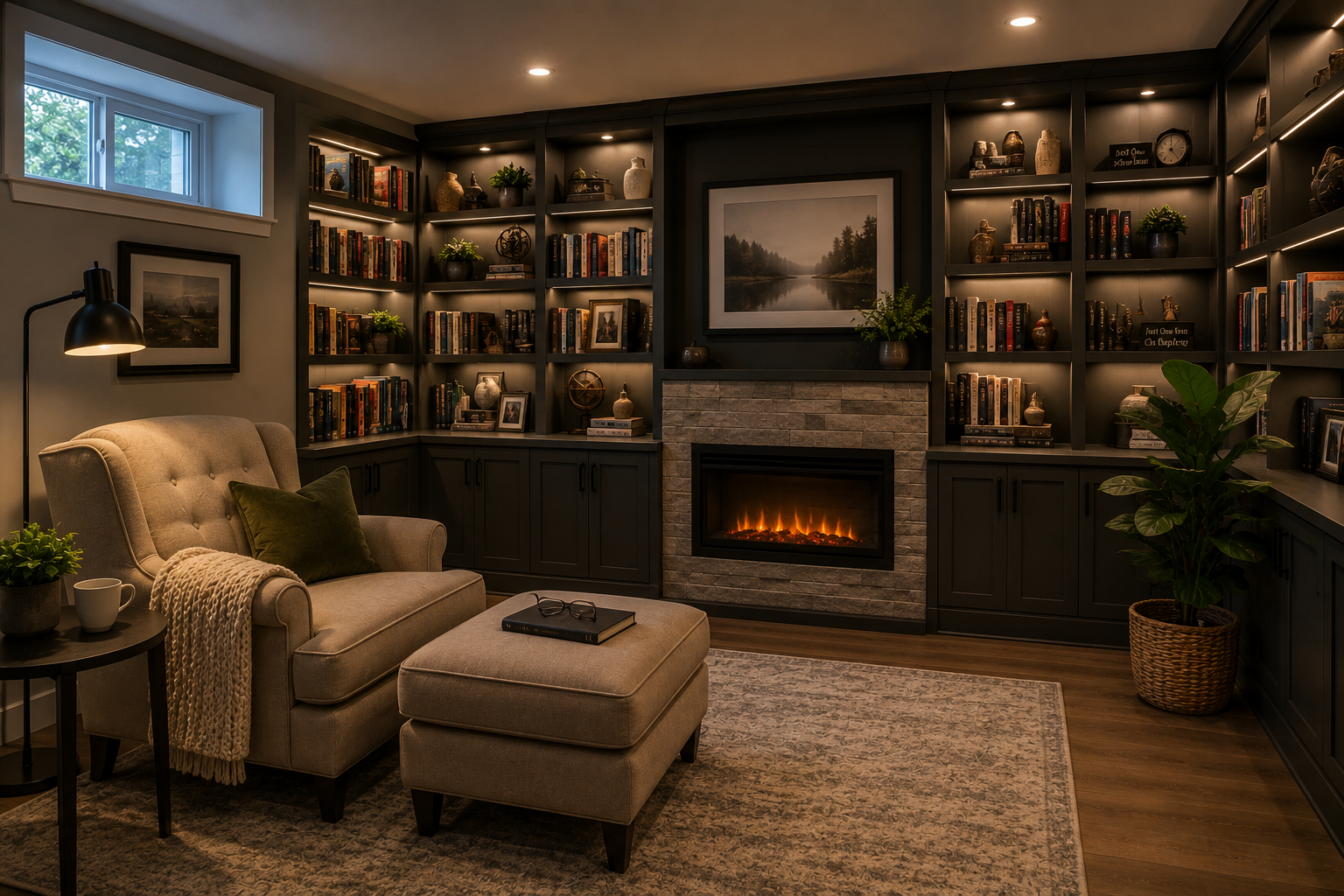
Some basement hobby spaces are less about making and more about collecting. Sports memorabilia, records, books, models, wine accessories, artwork, and other collections can become meaningful design features when displayed thoughtfully.
Built-in cabinets, glass-front shelving, custom lighting, and closed storage can protect items while creating a curated appearance. The room should not feel like an overcrowded storage area. It should give important pieces enough room to be appreciated.
Lighting should be selected carefully for sensitive collections. Excessive heat, direct sunlight, and certain types of light can damage materials over time. Humidity and temperature should also remain stable, particularly for paper, records, textiles, and valuable items.
A well-designed collection room can become one of the most personal spaces in the home and a comfortable place to enjoy the items rather than simply storing them.
A Hobby Room Can Include a Comfortable Sitting Area
Not every part of a creative hobby involves active work. Planning, reading, research, conversation, and reflection are often part of the process. A small sitting area can make the room more comfortable and versatile.
An armchair, small sofa, side table, or reading lamp can create a place to review ideas, browse reference material, or take a break. In shared hobby rooms, the sitting area allows another family member to spend time in the room without interfering with the project.
This feature can also make the room easier to repurpose later. A hobby room with comfortable seating may eventually become an office, guest room, reading space, or quiet lounge.
Keep Everyday Supplies Within Reach
A hobby room becomes frustrating when frequently used tools are difficult to access. The most common items should be stored near the main work area, while less frequently used materials can be placed in higher cabinets or deeper storage.
Homeowners should think about the order of the activity. Where do materials come from? Where is the work completed? Where does cleanup happen? Where are finished projects stored? Arranging the room around that sequence can make the workflow much smoother.
Charging stations may also be useful for cordless tools, cameras, tablets, or other electronic equipment. Dedicated outlets and cable management keep the work surface clearer and reduce the need for extension cords.
Plan for Ventilation and Air Quality
Some hobbies create dust, fumes, heat, or humidity. Woodworking, painting, resin projects, photography, and certain crafts may require additional ventilation or filtration.
The room should be planned around the materials and equipment being used. This may involve exhaust fans, air purifiers, dust collection, or careful placement near mechanical systems. Products should always be used according to their safety requirements.
Good air circulation also helps any basement hobby room feel more comfortable during long periods of use. A room that feels stale or overly warm is less likely to be used consistently.
A Hobby Space Can Add Resale Flexibility
A highly personalized room may seem less relevant to future buyers, but the underlying features can still add broad value. Good lighting, cabinetry, work surfaces, storage, electrical capacity, and a flexible layout can support many possible uses.
A craft room may become a home office. A music room may become a media room. A collecting room may become a library. A workshop may become a gym or utility room. The key is creating strong foundational features without making every part of the room impossible to adapt.
This flexibility makes the renovation useful for the current homeowner while preserving broader appeal in the future.
Why Professional Basement Contractors Matter
A basement hobby room often requires more coordination than a typical spare room. Cabinetry, lighting, plumbing, electrical service, ventilation, flooring, sound control, and storage may all need to support one specific activity.
Professional basement contractors can help homeowners identify these needs before construction begins. They can also make sure the hobby space fits naturally within the rest of the lower level rather than feeling isolated.
Assured Basements follows a structured renovation approach that connects design, construction, and finishing. Homeowners can review the Our Work Process to learn more about how a custom lower level project moves from planning to completion.
For visual inspiration, the Assured Basements Our Work gallery shows how customized features and finished spaces can come together throughout a complete basement renovation.
Conclusion: A Basement Hobby Room Makes Space for What You Enjoy
The best basement craft room and hobby space ideas begin with the activity itself. Thoughtful work surfaces, strong lighting, organized storage, durable finishes, and comfortable layouts make hobbies easier to enjoy and easier to maintain.
For Ontario homeowners, a dedicated hobby room can add far more than another finished room. It creates space for creativity, personal interests, relaxation, and meaningful time at home. It also keeps tools and materials organized so the rest of the house feels less cluttered.
Whether the goal is sewing, painting, music, collecting, model building, photography, or another passion, the basement can be designed to support it properly.
To discuss a customized basement craft room or hobby space for your home, visit the Assured Basements Contact page or call 1-866-580-8484 to schedule a consultation.
You might also like
Get Your Basement Renovated In Toronto By Assured Basements