
How to Make an Ottawa Basement Feel Warm, Bright, and Comfortable Year Round
Why Comfort Matters So Much in an Ottawa Basement
A basement can add a huge amount of useful living space to a home, but only if it feels comfortable enough to use throughout the year. For homeowners in Ottawa, that matters even more because the lower level has to perform through cold winters, warm summers, and everything in between. A basement that feels noticeably colder, darker, or more disconnected from the rest of the home will never get used as much as it should.
That is why the best basement renovation Ottawa projects focus on comfort just as much as appearance. A beautiful media wall, stylish flooring, or custom bar can all improve the look of the space, but if the room feels chilly or dim, the overall result will still feel incomplete.
The goal should be to create a lower level that feels like another part of the home. That means warmth, good lighting, comfortable materials, proper air circulation, and a layout that makes the basement inviting in every season.
For Ottawa homeowners considering a full basement renovation, comfort should be part of the design conversation from the very beginning.
Start With Insulation and the Building Envelope
One of the most important parts of creating a warm basement is what happens behind the finished walls.
Basements are below grade, which means they interact differently with temperature and moisture than rooms above ground. Proper insulation can make a major difference in how the space feels and how consistently it maintains temperature.
If the basement walls are poorly insulated, the room may feel cool even when the thermostat says the house is warm. That is because the surrounding surfaces themselves can remain cold.
Good insulation helps create a more stable environment and can make the lower level feel much closer to the comfort level of the main floor.
This is one of those areas where professional basement experience matters because the goal is not simply to add insulation. It is to select and install materials appropriately for basement conditions.
Do Not Ignore the Floor
The floor has a major effect on how warm a basement feels.
Concrete slabs can feel cool underfoot, especially during Ottawa winters. That means flooring decisions should be based on more than appearance alone.
Luxury vinyl plank remains a popular option because it offers a warmer visual feel than tile while being practical for basement conditions. Depending on the project, additional floor preparation or underlayment may also help improve comfort.
Area rugs can then be added in family rooms, bedrooms, reading areas, and lounges to create another layer of softness.
The goal is not necessarily to make the entire floor physically warm. It is to make the space feel comfortable enough that people are happy to spend long periods downstairs.
Think About Heating Early
If the basement currently feels colder than the rest of the home, the renovation is the right time to address that.
Heating should not be treated as something to figure out after the walls are closed and the rooms are finished. The layout and intended use of the basement should influence how heat is distributed.
A family room, bedroom, office, or gym may all have different comfort needs.
Air supply and return placement matter. The basement should not simply receive whatever heating is left over from the rest of the house.
The goal is to create a balanced environment rather than one where the main floor feels comfortable while the basement remains several degrees cooler.
Air Circulation Matters Too
Warmth is not only about heating. Good air circulation also helps the basement feel more comfortable.
A basement that feels stale or heavy will not be inviting, even if the temperature is technically correct.
Proper HVAC planning can improve air movement and help the lower level feel fresher. This becomes especially important if the basement includes bedrooms, a gym, a bathroom, a sauna, or other spaces where humidity and air quality matter.
The best basement renovations consider temperature, humidity, and airflow together.
Make the Most of Natural Light
Natural light can completely change how a basement feels.
Even modest basement windows can make the space feel brighter and more connected to the outside when the layout uses them properly.
Avoid placing tall storage units, cabinets, or bulky furniture directly in front of available windows. Instead, try to position rooms that benefit from daylight near those openings.
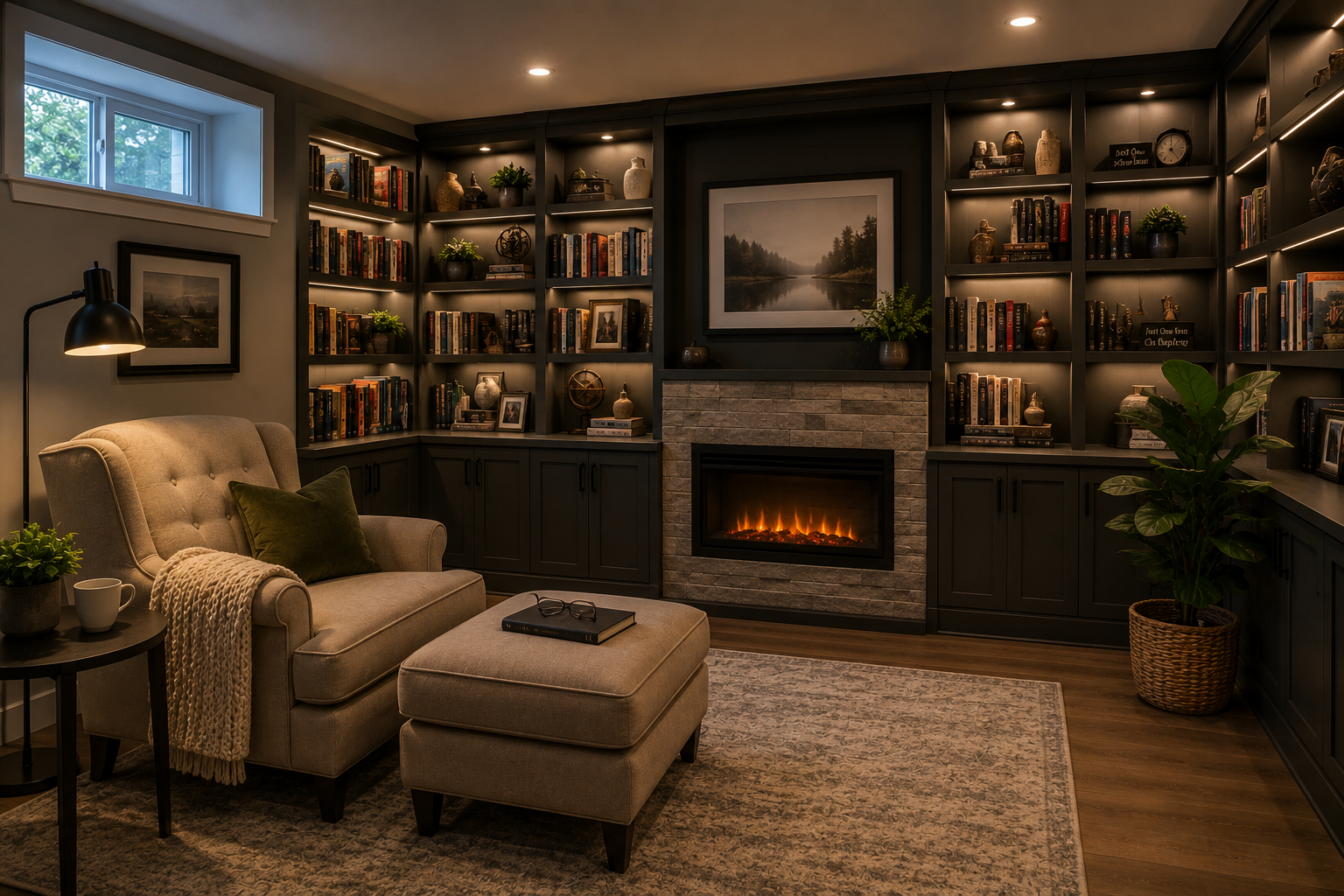
Home offices, reading areas, bedrooms, craft rooms, and family rooms all benefit from natural light.
Light wall colours can also help reflect daylight farther into the room, but that does not mean every surface needs to be white.
Warm neutrals, soft greys, muted greens, and natural wood tones can all keep the room feeling bright while still giving the basement character.
Use Layered Lighting Instead of One Bright Source
Artificial lighting does most of the work in a basement, so the lighting plan has to be thoughtful.
One overhead fixture is rarely enough.
A better approach uses several layers of light.
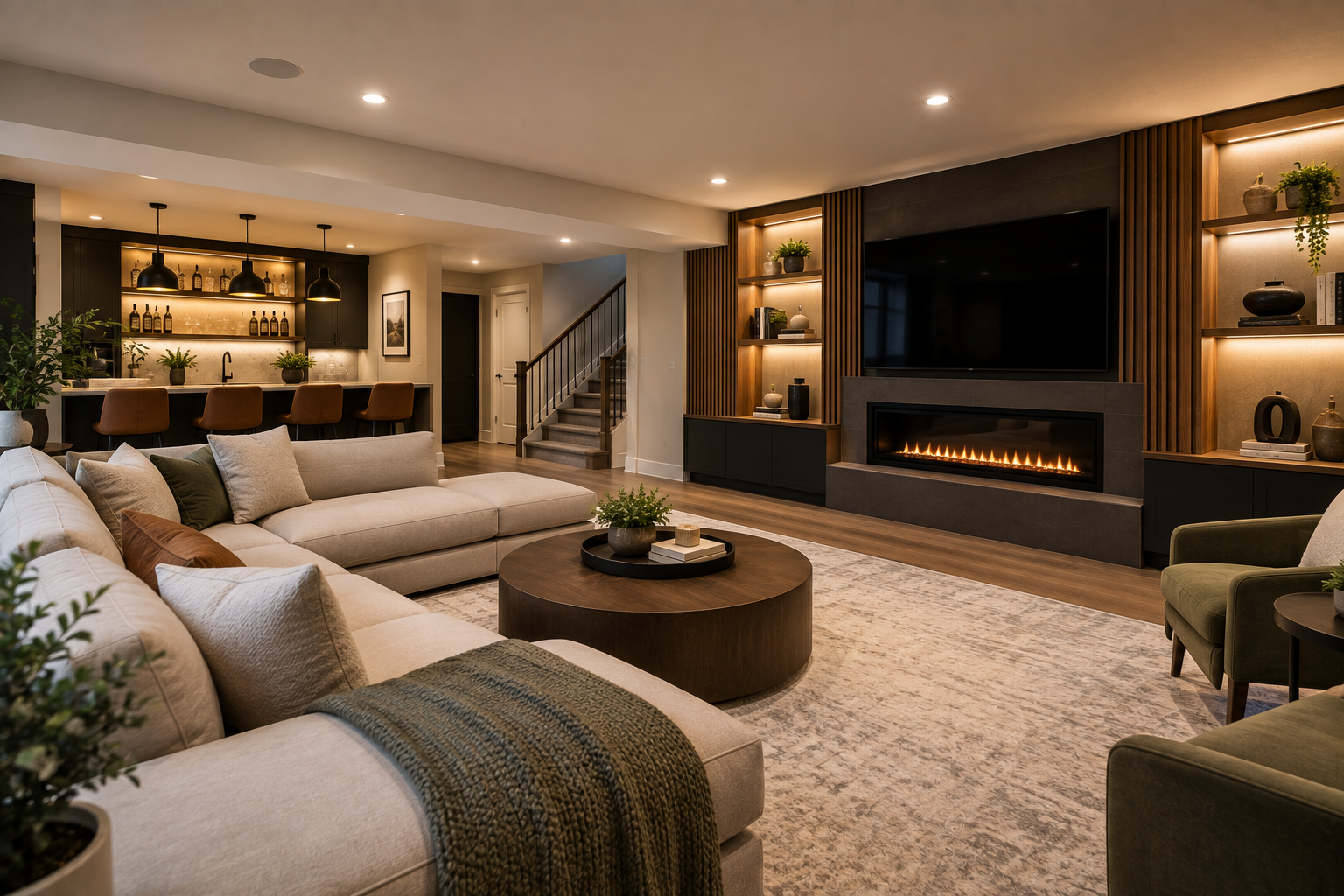
Recessed ceiling lights can provide general illumination throughout the room. Lamps and sconces can add warmth. Pendants can define a bar or kitchenette. Under cabinet lights can improve work areas. Shelf lighting can highlight built ins and decorative features.
Dimmers are especially valuable because they let homeowners change the mood depending on the activity.
A family room may need brighter lighting during the day and softer lighting at night. A bar may look better with accent lighting. A reading area may need focused task light.
The room should feel adaptable rather than locked into one level of brightness.
Warm Light Temperatures Make a Big Difference
The colour of the light matters almost as much as the amount of light.
Very cool white lighting can make a basement feel clinical or harsh. Warmer light temperatures usually create a more comfortable atmosphere, especially in living areas.
The goal is to create enough brightness without losing warmth.
That balance becomes especially important in Ottawa during winter months when natural daylight is more limited and homeowners may spend more time indoors.
A well lit basement should still feel relaxed.
Use Warm Materials to Offset the Basement Environment
Basements naturally have a tendency to feel more solid and enclosed than the main floor.
Warm materials can help soften that.
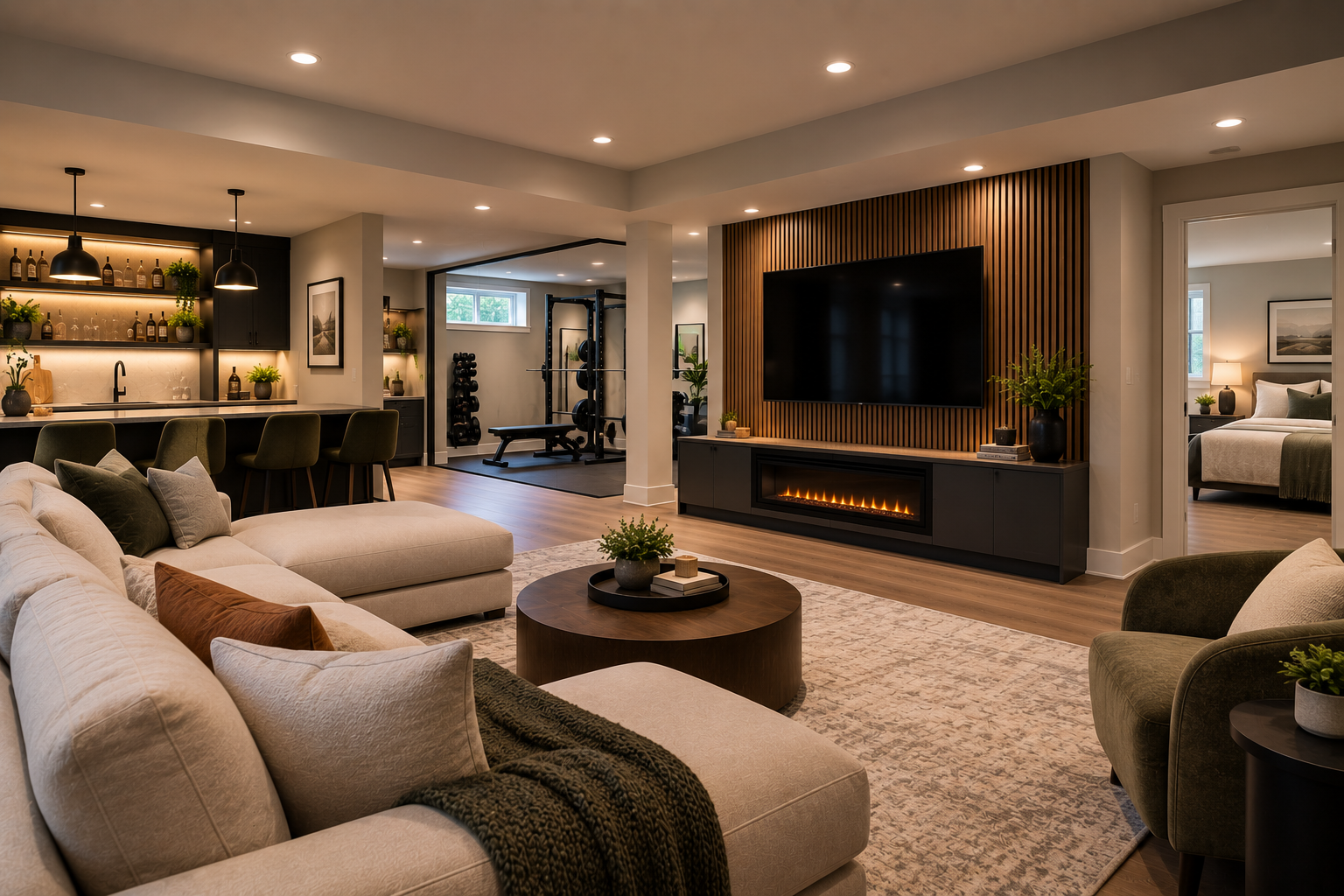
Wood tones are particularly effective because they introduce natural warmth. This can come through flooring, built in cabinetry, shelving, wall slats, furniture, or staircase details.
Textiles also matter.
Area rugs, throw blankets, upholstered furniture, curtains, and cushions all help create a more comfortable atmosphere.
Even a modern basement with dark cabinetry and clean lines can feel warm if the room includes enough natural texture and softness.
Consider a Fireplace as a Comfort Feature
A fireplace can add both visual and physical warmth to a basement.
Electric fireplaces are especially popular in lower levels because they can be integrated into media walls, lounges, or reading areas without requiring the same type of construction as a traditional fireplace.
A fireplace creates a strong focal point and can make the room feel especially inviting during colder Ottawa months.
It also helps the basement function as more than an entertainment space. The same room can become a comfortable place to read, relax, or spend quiet time.
When designed properly, the fireplace becomes part of the architecture rather than a decorative add on.
Keep the Colour Palette Warm
Basements can handle darker colours better than many homeowners assume, but the palette should still feel intentional.
Warm whites, taupes, greiges, muted greens, soft charcoals, warm browns, and natural wood tones can all work well.
The goal is to avoid a palette that feels too cold or flat.
If darker colours are used, they should usually be balanced with good lighting and lighter materials.
A dark accent wall can create depth. Dark cabinetry can feel sophisticated. A charcoal media wall can add drama.
The key is making sure the room still feels comfortable and not cave like.
Ceilings Affect Brightness More Than People Realize
The ceiling can have a major impact on how open the basement feels.
A clean, light ceiling helps reflect light and keeps the room feeling taller.
Bulkheads should be kept as simple as possible and integrated into the design rather than becoming distracting visual obstacles.
Recessed lighting usually works well because it preserves headroom and creates an even ceiling line.
If the basement has lower ceiling areas, those sections can be used for storage, hallways, or secondary spaces while the main living areas are positioned where the ceiling feels more open.
A thoughtful ceiling plan can make the whole lower level feel brighter and more spacious.
Windows Should Be Treated as Design Features
Basement windows are often small, but they still deserve attention.
Clean trim, light window wells, and proper window treatments can improve how much light the room receives.
Avoid heavy curtains that block limited daylight. If privacy is needed, lighter shades or simple blinds may work better.
If the basement includes a bedroom, windows also need to be considered from a practical and safety perspective.
The more intentional the window treatment, the less the basement feels like a below grade afterthought.
Layout Can Improve Comfort
A comfortable basement is not only about temperature and lighting. Layout matters too.
Rooms should feel easy to move through and properly proportioned.
A family room should not be overloaded with furniture. A hallway should not feel too narrow. A bedroom should not be squeezed into leftover space. A gym should have enough room to move safely.
Comfort often comes from simplicity.
When the layout is calm and logical, the basement feels more relaxed.
Open concept designs can help, but too much openness can also make the space feel undefined. The best layouts balance connection with purpose.
Use Rugs to Define Warm Zones
Area rugs are especially useful in basements because they help create warmth while also defining spaces.
A large rug beneath a sectional can anchor the family room. A smaller rug can define a reading nook. A runner can soften a hallway.
Rugs also improve acoustics by reducing echo.
This is especially useful in basements with hard flooring, open layouts, and media areas.
The right rug makes the room feel more finished without introducing a permanent surface that is harder to maintain.
Sound Control Can Improve Comfort Too
A basement can feel less comfortable if every sound from the main floor travels down or every sound from the basement travels up.
Sound control should be considered during the renovation.
Insulation, ceiling assemblies, room placement, rugs, upholstered furniture, and acoustic treatments can all help.
A quieter basement feels more private and more relaxed.
This matters especially in bedrooms, offices, reading rooms, theatres, and music spaces.
It also makes the whole home function better because the lower level can be used more freely without disturbing everyone upstairs.
Add a Bathroom to Make the Basement Feel More Complete
A bathroom can make a basement feel much more like a complete living level.
Homeowners do not have to keep going upstairs, and the basement becomes more practical for guests, children, entertaining, workouts, and everyday use.
A warm, well lit bathroom also reinforces the idea that the lower level is not simply bonus space.
If the basement includes a guest room, gym, sauna, or entertainment area, the bathroom becomes even more valuable.
Placement should be considered early because plumbing affects the overall layout.
Consider a Sauna or Wellness Area
For Ottawa homeowners, a wellness focused basement can be especially appealing.
A sauna, shower area, home gym, or quiet relaxation zone can make the lower level feel like a private retreat.
These features also fit naturally with the idea of making the basement comfortable year round.
A warm sauna area during winter can add real lifestyle value, while a home gym makes it easier to stay active without leaving the house.
The key is making sure these features are integrated into the broader lower level rather than squeezed into leftover space.
Homeowners looking for custom possibilities can explore Assured Basements' basement remodelling services.
Keep Storage Organized and Out of Sight
Visual clutter can make a basement feel smaller and less relaxing.
That is why storage should be integrated into the design.
Closed cabinets, built ins, closets, under stair storage, and dedicated storage rooms all help keep everyday items out of sight.
The cleaner the visible living areas remain, the more comfortable the basement feels.
This is especially important in family rooms, guest areas, and lounges where the goal is to create a calm atmosphere.
Make the Staircase Part of the Experience
The basement begins at the staircase.
A dark or unfinished stairwell can make the lower level feel disconnected before anyone even reaches it.
Updated lighting, clean treads, modern railings, and coordinated finishes can create a much stronger transition.
The staircase should feel like it belongs to the rest of the home.
When the path downstairs is bright and inviting, the basement itself immediately feels more accessible and more complete.
Keep the Design Consistent With the Main Floor
A basement does not need to copy the upper floors exactly, but it should still feel like part of the same house.
Using related flooring tones, hardware finishes, trim profiles, colours, and lighting styles creates a stronger connection.
This continuity is one of the biggest factors in making a basement feel less like a separate level.
The goal is for someone to walk downstairs and feel like they are still inside the same home, just in a different type of living space.
Why Professional Planning Matters
Creating a warm, bright, and comfortable basement requires more than selecting nice finishes.
Insulation, HVAC, flooring, lighting, moisture management, ceiling design, windows, sound, and layout all work together.
That is why professional basement planning is important.
Assured Basements follows a structured process that coordinates these details throughout the renovation. Homeowners can review the Our Work Process to see how the project moves from planning through construction and finishing.
The Our Work gallery can also help Ottawa homeowners visualize how a finished lower level can feel polished, comfortable, and fully connected to the rest of the home.
Conclusion: Ottawa Basements Should Feel Comfortable in Every Season
A basement should not feel like a compromise.
For Ottawa homeowners, the best lower levels are warm enough for winter, bright enough to feel inviting, and comfortable enough to use every day.
That comes from thoughtful planning.
Insulation, flooring, lighting, air circulation, layout, colour, storage, and materials all contribute to how the basement feels.
When those elements are handled properly, the lower level can become one of the most comfortable spaces in the home rather than an area that only gets used occasionally.
If you are planning a basement renovation in Ottawa and want a lower level that feels warm, bright, comfortable, and fully integrated into your home, Assured Basements can help develop a design around your space and lifestyle.
Browse the Our Work gallery for inspiration or visit the Contact page to discuss your Ottawa project.
Call 1-866-580-8484 to get started.
You might also like
Get Your Basement Renovated In Toronto By Assured Basements